
Last updated November 24, 2026
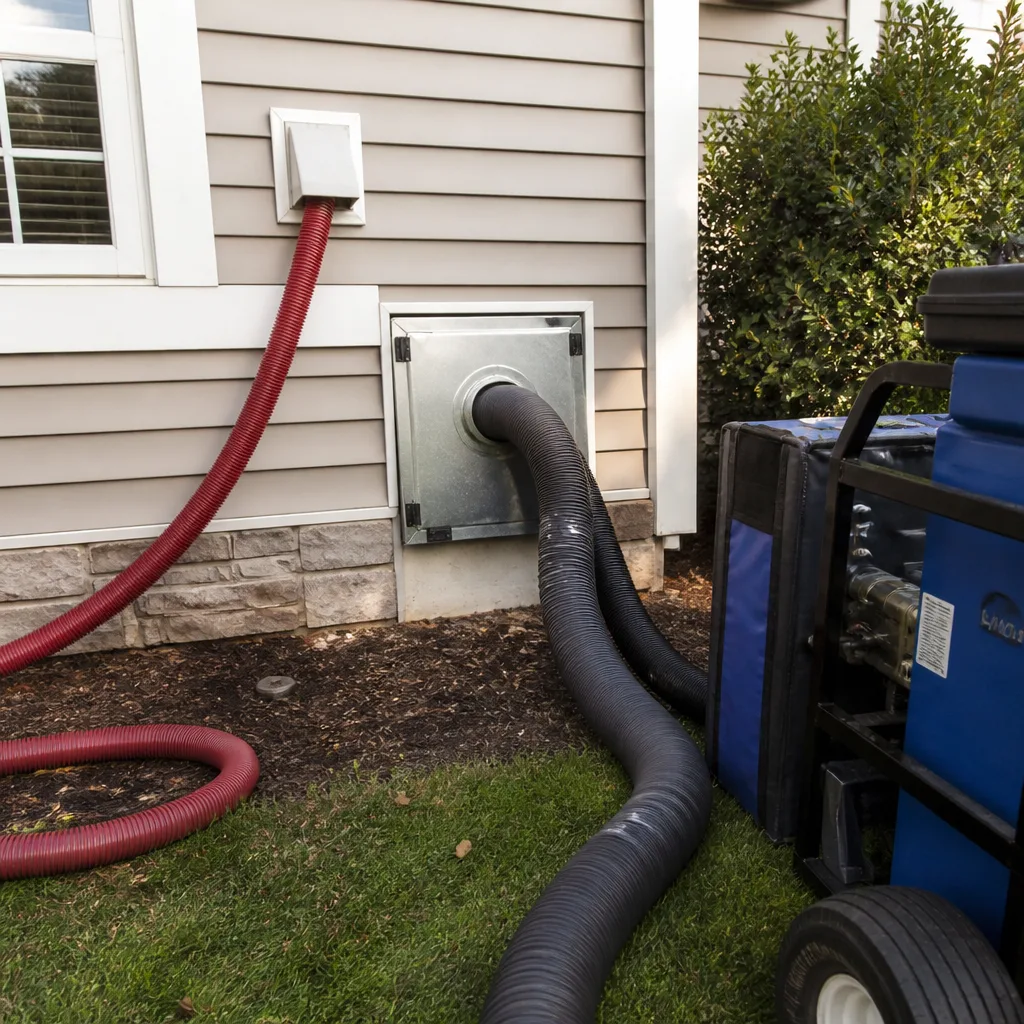 Whole-home duct cleaning
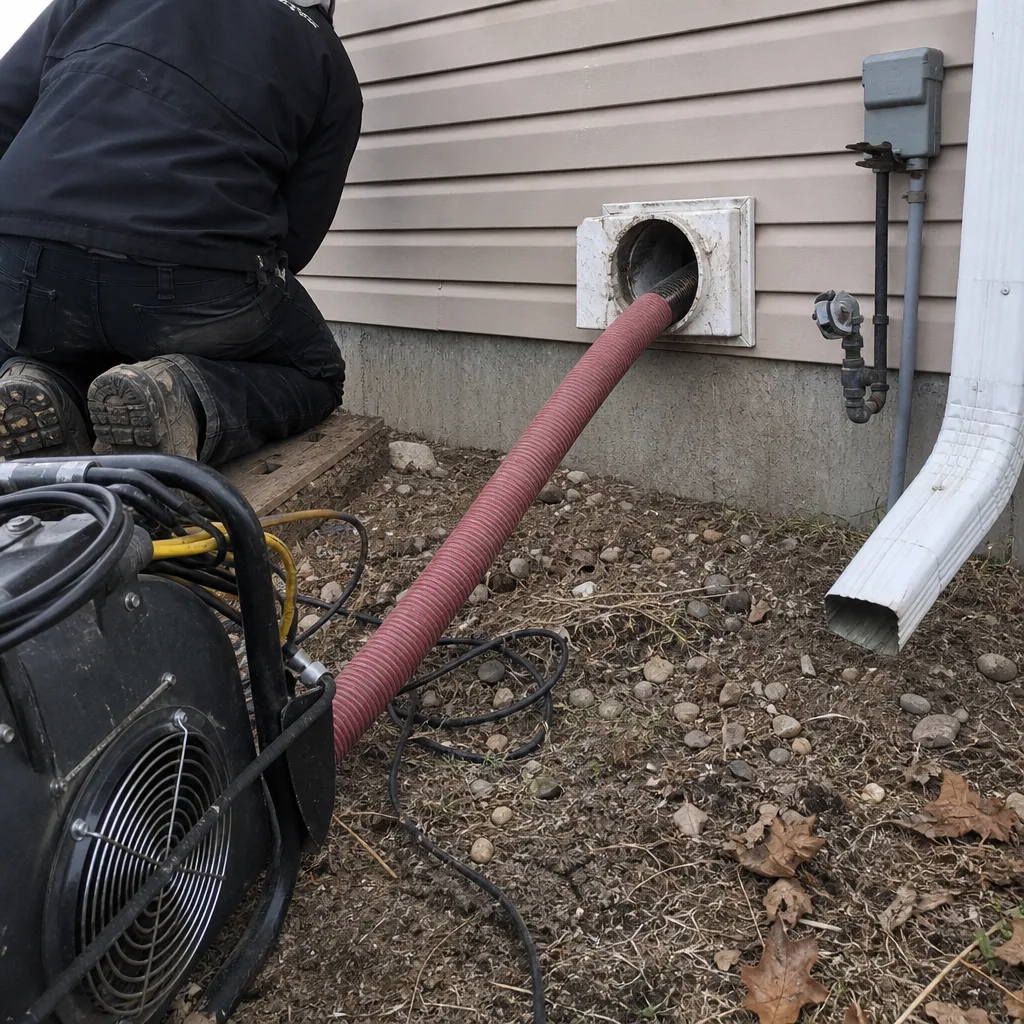
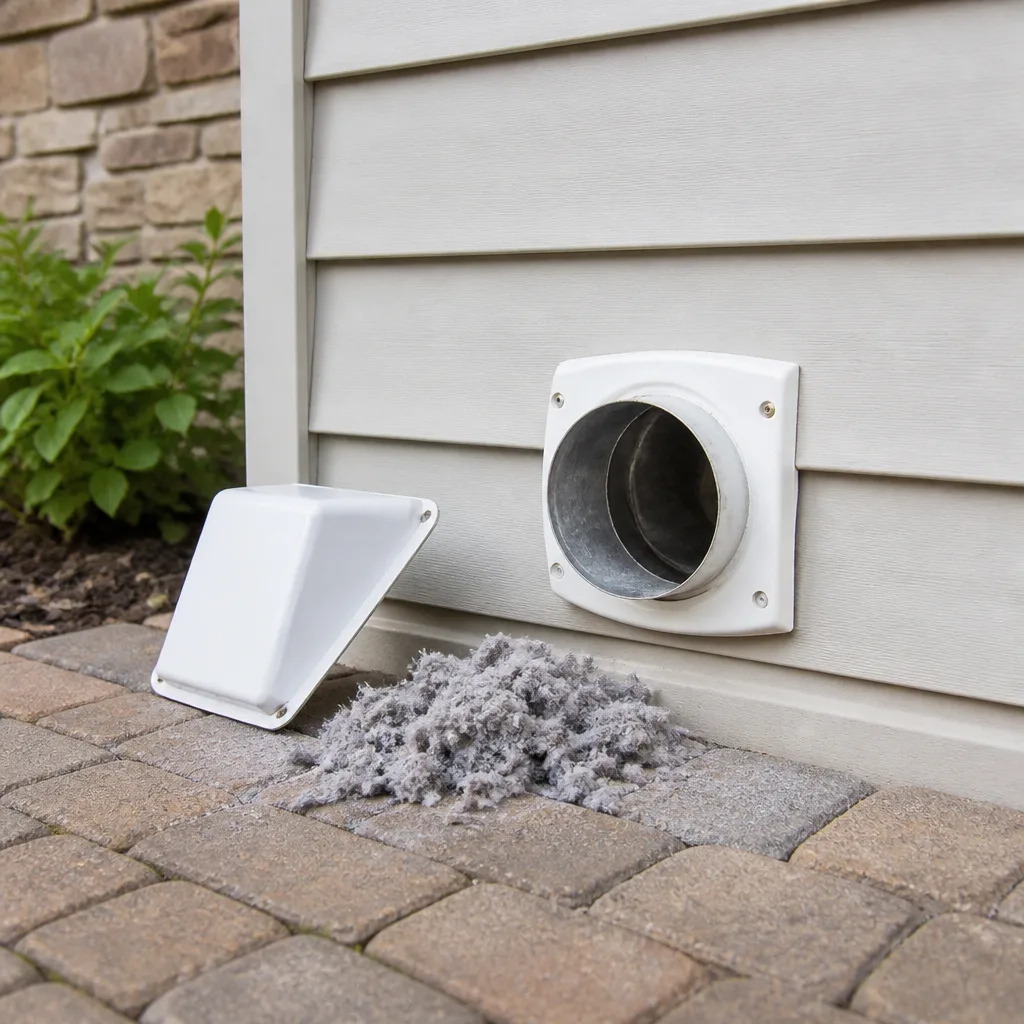 Dryer vent cleaning
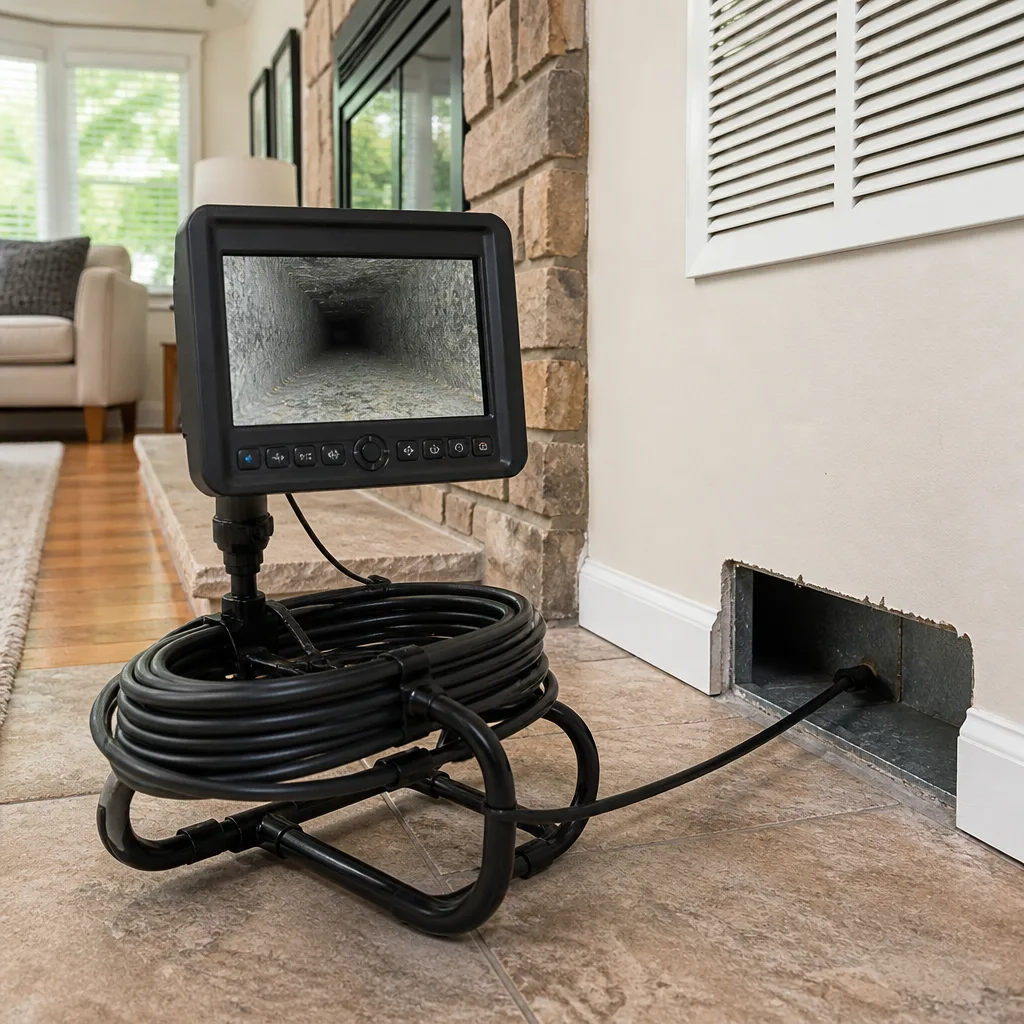 Camera inspection
 Sanitizing & deodorizing
Whole-system duct and dryer vent check with before-and-after photos - you see exactly what came out of your vents
That "$99 whole-house special" is a bait ad - the real number appears once they are in your hallway, or the "clean" is a shop-vac at the register. We photograph the inside of your ducts before and after instead.
DIY vs Professional Air Duct Cleaning: The American Fork Homeowner’s Decision Guide
Your duct system snakes through roughly 100 to 150 feet of floor joists, closet chases and crawlspaces. The cleaning kits sold at home improvement stores reach maybe the first six inches behind each register. That gap between what you can touch and what’s actually coating the inside of your ducts is why DIY duct cleaning is a different activity entirely from what a professional does – not a cheaper version of the same job. In this guide we’ll walk through the physics that separates the two, what DIY genuinely can accomplish, when rolling up your sleeves makes the problem worse, and how American Fork homeowners can decide which path fits their house.
Quick Answer
DIY air duct cleaning can handle surface work at the register, but it cannot remove settled debris from the duct system because consumer vacuums don’t generate the negative pressure required. Professional cleaning uses equipment rated at 1,500 to 4,000 CFM inside a sealed, negative-pressure containment zone, which is why it removes contamination instead of stirring it into your living space. For most American Fork homes, professional cleaning every few years plus simple DIY maintenance between visits is the practical balance.
Styles & brands we work with
- Whole-home duct cleaning
- Dryer vent cleaning
- Camera inspection
- Sanitizing & deodorizing
Table of Contents
- Why DIY Duct Cleaning Doesn’t Work: The Physics of Negative Pressure
- CFM Ratings: What Consumer Vacuums and Professional Equipment Actually Do
- What DIY Cleaning Can Legitimately Accomplish
- When DIY Makes the Problem Worse
- How Often Do American Fork Ducts Really Need Cleaning?
- How to Tell If a Previous Owner’s DIY Attempt Left a Mess
- Signs Your Ducts Need Professional Attention
- What Professional Duct Cleaning Actually Involves
Why DIY Duct Cleaning Doesn’t Work: The Physics of Negative Pressure
Source removal cleaning – the only kind that meaningfully reduces contamination – depends on one thing working correctly: the entire duct system has to be under negative pressure while the technician works. Negative pressure means the air pressure inside the ducts is lower than the air pressure in your living room. When a brush or air whip loosens debris from the duct wall, that debris gets pulled toward the vacuum collection point instead of drifting out through the nearest register into your kitchen.
Creating that condition is a mechanical problem, not a brush problem. You need a vacuum source strong enough to overcome the resistance of a long, branching duct system, and you need every open register sealed off so air only enters one way and exits one way. In practice, a contained professional setup looks like this:
- All supply and return registers are removed and covered with sealed containment.
- A high-powered vacuum unit connects to the main trunk through a purpose-built access port.
- The system is brought to negative pressure before any agitation begins.
- Contact cleaning tools work from the inside, pulling debris toward the vacuum, never pushing it into rooms.
- A HEPA filtration stage captures fine particles before air is exhausted.
We use Abatement Technologies equipment specifically because it maintains negative-pressure containment throughout the job, so dislodged debris has one path out: into the collection system. Without that containment, cleaning isn’t cleaning – it’s redistribution. That’s the core reason we don’t treat a shop vac and a length of flexible hose as a smaller version of the same service. They’re not doing the same physical thing.
CFM Ratings: What Consumer Vacuums and Professional Equipment Actually Do
CFM stands for cubic feet per minute – the volume of air a vacuum can move. A typical consumer shop vacuum, the biggest thing most homeowners will rent or buy for a duct project, moves somewhere in the neighborhood of 100 to 200 CFM at the hose. Professional duct cleaning units run from 1,500 CFM on the smaller end up to 4,000 CFM on gas-powered truck-mounted systems. That’s not a difference of degree. It’s a difference of category.
Here’s why the raw number matters so much in a real house. Your duct system is not a straight pipe. It’s a tree of branches, elbows, transitions and flexible runs, and each of those adds resistance. Every foot of duct and every fitting reduces the effective airflow at the far end. In a typical American Fork home with a finished basement and a second story, the run to the farthest bedroom register might travel 60 feet through two elbows and a reducer. A 120 CFM shop vac is effectively doing almost nothing at that distance. A 2,000 CFM unit still has enough airflow at the farthest register to actually move loosened debris.
| Equipment | Typical CFM | What It Can Do |
|---|---|---|
| Consumer shop vacuum | 100-200 CFM | Loose dust within a few feet of the nozzle |
| Retail duct cleaning kit | Depends on host vacuum | Contact-scrub the first few feet of duct |
| Portable pro unit (Rotobrush-type) | 1,500-2,000+ CFM | Full-system contact cleaning with containment |
| Truck-mounted system | Up to 4,000 CFM | Large homes and long duct runs |
When we run Rotobrush contact cleaning through the ducts in an American Fork home, the combination of airflow and mechanical agitation is what removes the layer of dust that’s settled into the seams, the corners of the rectangular trunk, and the flexible connectors. A shop vac at the register can’t reach any of that. This is also why we can’t quote a per-vent price for a proper job – the scope depends on the layout, the amount of contamination and the number of branches, and the honest answer is per system. When you call for a free estimate, we look at the system as a whole and write the price for that system.
What DIY Cleaning Can Legitimately Accomplish
There is real work a homeowner can do, and we’d rather you spend your energy there than rent a machine that won’t help. If you’re looking for practical maintenance between professional visits, these tasks pay off:
- Clean the register covers. Pull the grilles and wash them in the sink or with a hose. The visible dust layer on a register is real, and removing it improves the appearance of the room and slightly reduces what gets pulled back into the airstream.
- Replace your air filter on schedule. A clean filter is the single most effective thing most homeowners can do for indoor air quality. Check it monthly during heavy-use months and swap it when it’s visibly loaded.
- Inspect for visible mold at access points. Shine a flashlight into the boot openings at the floor or ceiling and look for dark spotting, musty staining or standing moisture. If you see it, stop and call a professional – mold inside a duct system is a containment situation, not a scrub-and-hope situation.
- Pick up debris at boot openings. Drywall dust, construction debris, pet hair and dropped items often collect right inside the boot. A vacuum nozzle or a gloved hand can lift what’s sitting in the visible opening.
- Keep the return grille clear. Furniture, boxes and rugs blocking a return restrict airflow and make the whole system work harder.
What none of these do is clean the inside of your ducts. That’s the honest boundary. For a deeper look at what a full air duct cleaning appointment covers, we’ve laid it out on the service page. And don’t forget the dryer vent – it’s easy to overlook but it’s one of the highest-risk spots in the house. That’s covered in our dryer vent cleaning guide.
When DIY Makes the Problem Worse
Some duct conditions get better with cleaning. Some get much worse when you disturb them without containment. The three cases below are where we see real damage from home attempts.
1. Disturbing settled mold spores without containment
Mold spores that have settled inside a duct are, in a sense, dormant. Disturb them and they go airborne. If you agitate a moldy duct section with a retail brush attachment while your HVAC fan is running – or while your family is in the next room – you’re moving contamination into the breathing zone of the house. Contained professional cleaning pulls those spores into a HEPA-filtered collection system instead. Sanitizing after the physical clean is what addresses the remaining microbial material; we use Guardsman-grade treatments for exactly that step, and only after the ducts have been physically cleaned.
2. Pushing debris further into the system
A brush on the end of a flexible rod with insufficient airflow behind it doesn’t pull debris out. It scrubs it loose and then lets it settle further down the run, in the elbow, or at the transition where flexible duct meets metal. Some of it ends up at the blower or the evaporator coil. We’ve seen systems where a single home attempt turned a light dust buildup into a concentrated blockage in the farthest branch. And because the removal tools used by a professional work from the inside under negative pressure, the debris travels against the airflow – toward the vacuum, not deeper into the house.
3. Removing register boots and forgetting to reseal them
Pulling a register boot to reach inside the duct feels productive. But boots are meant to be sealed at the boot-to-subfloor and boot-to-duct connections. If they aren’t resealed after the job, conditioned air escapes into the joist cavity, and unconditioned attic or crawlspace air can get drawn in. That’s an energy leak and an air quality problem at once. Resealing properly is a specific skill, and we handle it as part of our duct repair and sealing work – the same visit can fix the leak a previous attempt created.
How Often Do American Fork Ducts Really Need Cleaning?
Most homes do not need duct cleaning every year. If you hear a company pushing an annual contract on a home that hasn’t had a renovation, a pet addition or a moisture problem, that’s a good sign to look elsewhere. In our experience, a reasonable cycle for a typical American Fork home sits somewhere between three and seven years, depending on what’s happening inside the house.
Factors that shorten the cycle:
- Recent renovation. Drywall dust, sawdust and construction debris get pulled into the return system while the HVAC runs during the project. One clean soon after the work wraps is worth doing.
- Pets in the house. Pet dander and hair load a system faster than most people expect.
- Smoking indoors. Smoke residue accumulates on duct walls and does not come off with a shop vac.
- Older home, unknown history. If you’ve just bought a home and don’t know when the ducts were last touched, a first cleaning gives you a clean baseline.
- Water intrusion or visible mold. Any moisture event in the HVAC system calls for a professional look before you run the system.
Factors that stretch the cycle:
- No pets, no smoking, no recent construction.
- A regularly changed, properly sized filter.
- Ducts that have been sealed, not just cleaned, so they don’t pull dirty air in from adjacent cavities.
The valleys and bench areas around American Fork bring hot, dry summers and cold winters with significant snowfall. That swing pushes the heating and cooling system through heavy seasonal use, which means the filter is doing more work than people in milder climates realize. Change it more often than the packaging suggests during the peak months. Beyond that, use the interval rules above. If you’ve never had the ducts cleaned and don’t know the history, get an assessment – that’s what the free estimate is for. Our American Fork HVAC cleaning services cover the full air path from the unit through the ducts.
How to Tell If a Previous Owner’s DIY Attempt Left a Mess
When you’re buying a home in American Fork – whether it’s a newer build in the north end of town or an established property near the downtown grid – you may inherit ductwork with a history you can’t see. Here are the clues that suggest someone tried DIY duct cleaning and got it wrong, or that the ducts have never been properly cleaned at all:
- Register grilles covered in a fresh-looking dust film even after cleaning. That’s often debris still working its way out of the system after a partial clean.
- Boots that sit loose or show gaps at the subfloor. A sign that someone pulled them and didn’t get them resealed.
- Visible dust trails around register edges. Suggests air is escaping or being drawn in at the connection.
- Uneven airflow between rooms. Could be a restriction from debris pushed deeper into one branch.
- Musty odor that comes and goes with the HVAC. Suggests microbial material in the ducts or the evaporator coil.
- Disconnected or torn flex duct in the attic or crawlspace. Common after an amateur inspection that didn’t get put back together.
- No filter in the return, or a filter that’s clearly the wrong size. A tell that the system was maintained by guesswork.
If you find any of these signs, a professional inspection should come before you move in or before you run the system hard. Duct repair and sealing addresses the connections; cleaning addresses the contamination. Both can usually be handled in one visit.
Signs Your Ducts Need Professional Attention
The physical signs that it’s time to call a professional rather than reach for a shop vac:
- A persistent musty or dusty smell whenever the heat or AC kicks on.
- Visible mold at register openings, access doors or inside the HVAC cabinet.
- Excessive dust settling on furniture within days of cleaning.
- Allergy symptoms that get worse when the system runs.
- Recent renovation with drywall dust or sawdust pulled into the return.
- Pest activity – droppings, nesting material or dead insects found in duct runs.
- Airflow that’s noticeably weaker at some registers than others.
- A dryer that takes much longer than it used to (a dry vent restriction).
If you’re seeing more than one of these, stop and let a professional look. We can diagnose the problem, then clean, repair and treat the system rather than just removing the visible surface layer.
What Professional Duct Cleaning Actually Involves
If you’ve never had this done and aren’t sure what you’re buying, here’s the typical sequence in an American Fork home:
- Inspection and system walk-through. We look at the layout, the number of branches, the condition of the duct runs and any prior work.
- Containment setup. Registers are removed and sealed, the vacuum unit connects to the trunk, and the system is brought under negative pressure using Abatement Technologies equipment.
- Contact cleaning. Rotobrush contact cleaning tools and Nikro HEPA extraction work through the ducts from the inside, pulling contamination toward the collection point. Every branch gets worked.
- HVAC unit and coil cleaning. The blower and cabinet are cleaned so the air path from unit to register is fully addressed.
- Repair and sealing. Any disconnected, torn or unsealed joints are repaired and sealed so the system holds pressure and doesn’t pull air from unconditioned spaces.
- Sanitizing. A Guardsman-grade treatment is applied to inhibit microbial regrowth inside the cleaned ducts.
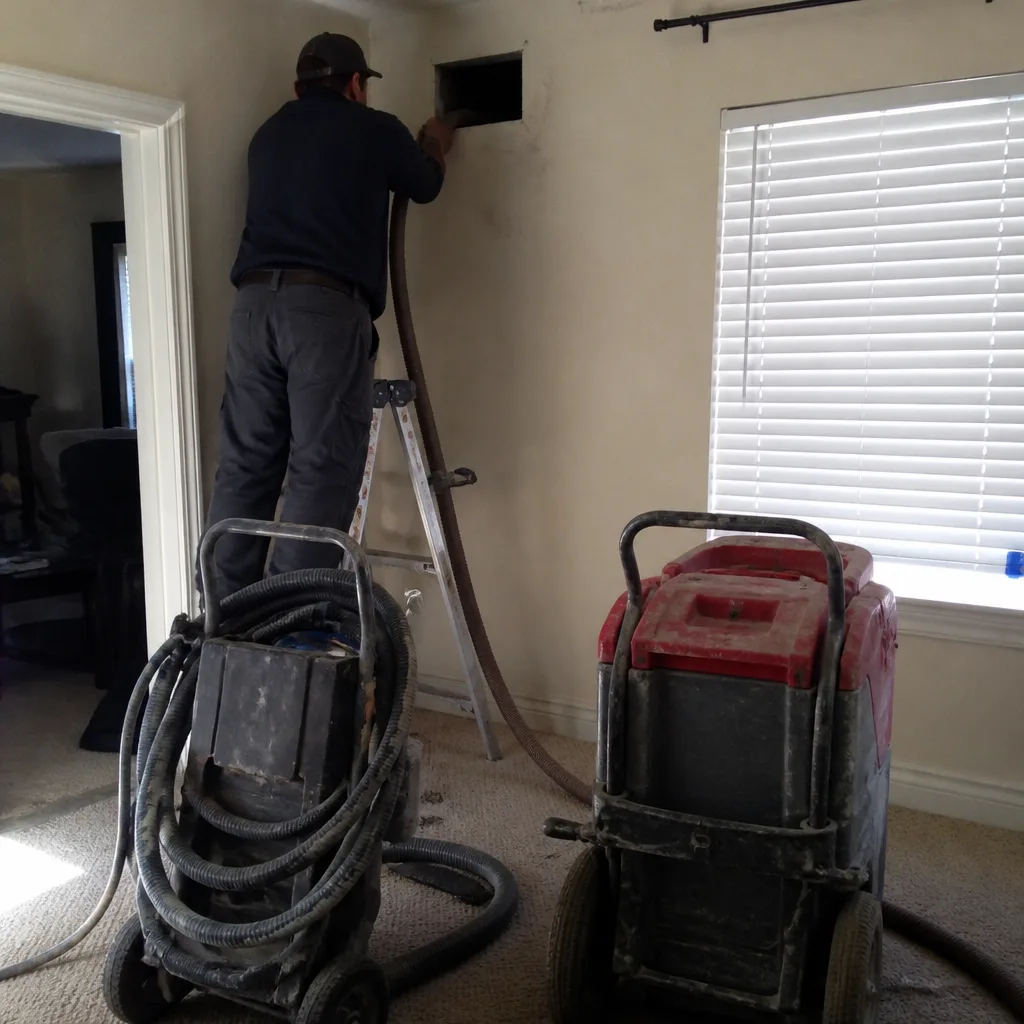
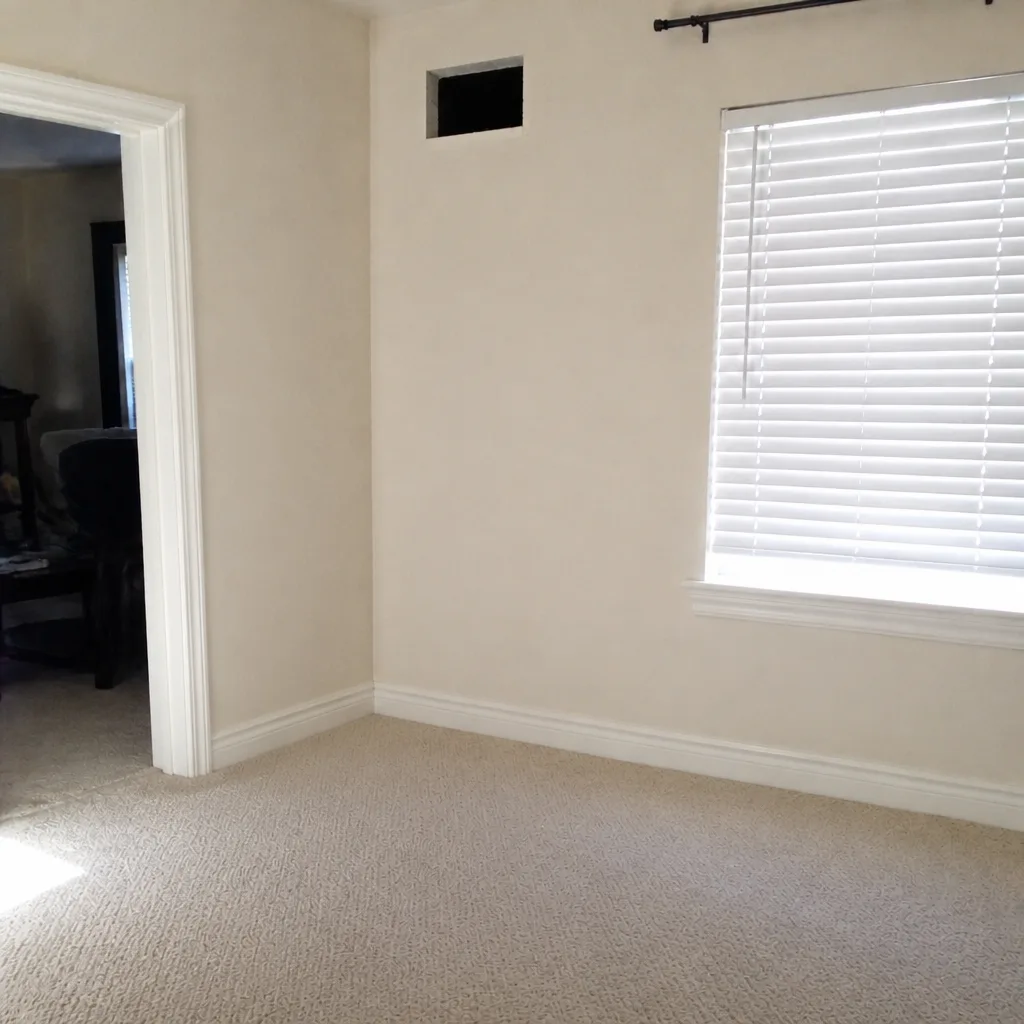
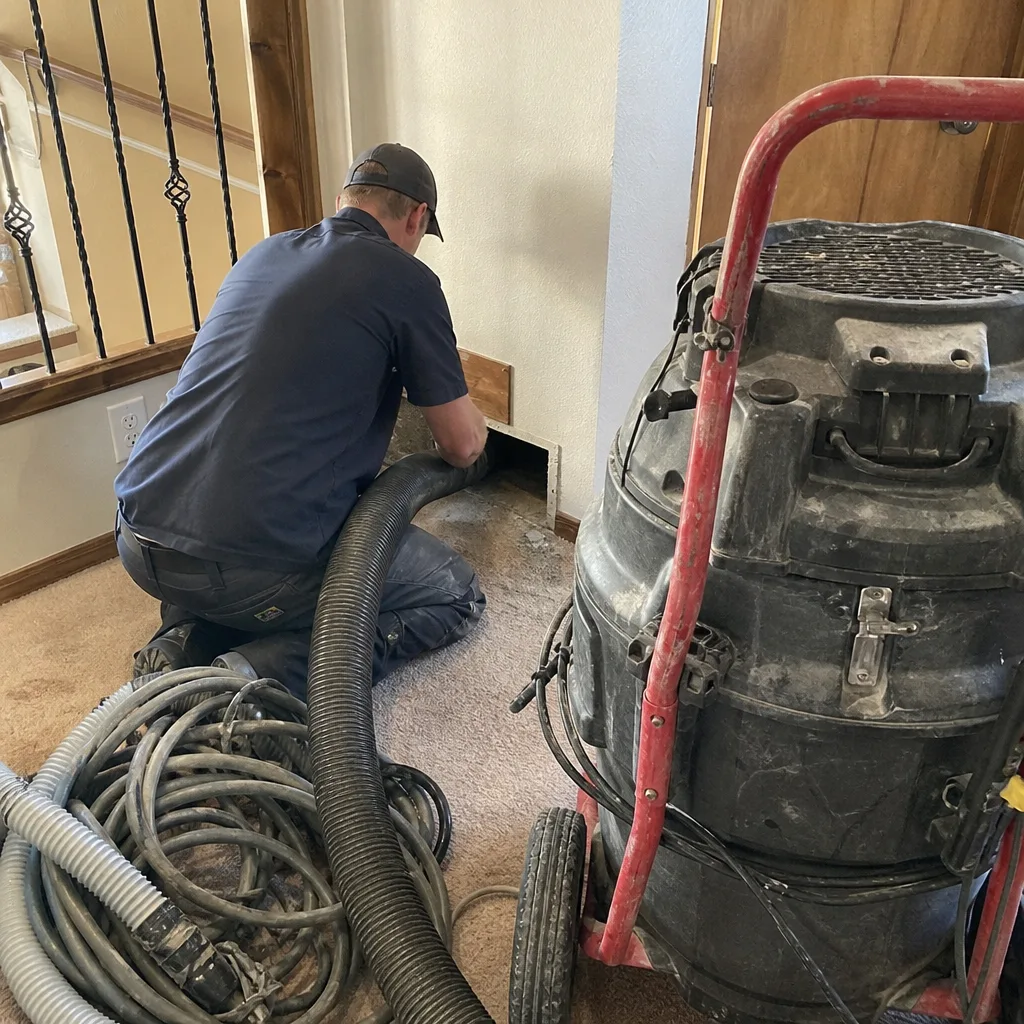
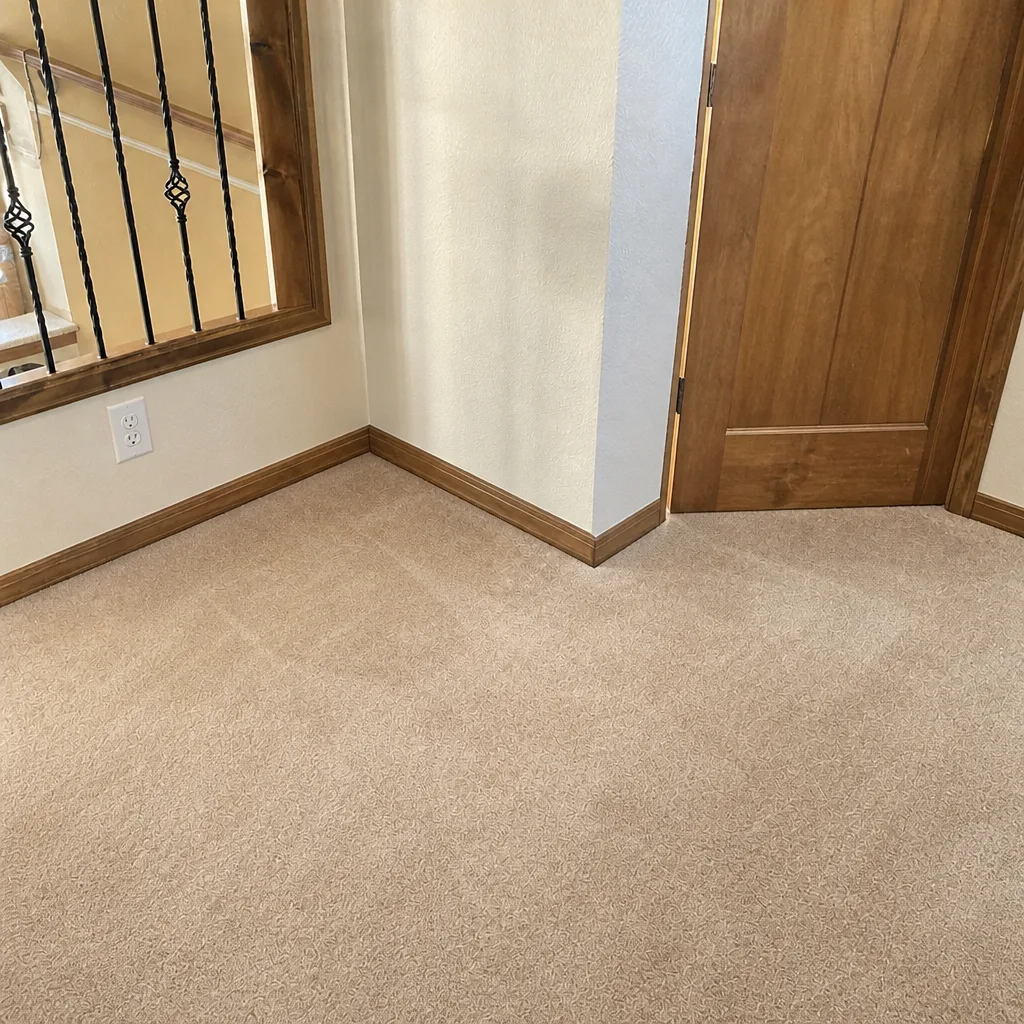
- Verification. Before and after photos of the ducts themselves are shared with the homeowner, so you can see exactly what changed. The final written estimate sets what you pay – one flat price per system, agreed before work starts.
We also offer IAQ upgrades after the clean if the house needs them – filtration and purification components from Honeywell and Aprilaire that fit the existing system. These aren’t required, but they’re a sensible add-on for homes with allergies, pets or a history of moisture. If you have a business or a rental property in American Fork, the same scope applies to commercial systems. The full service lineup is gathered on our American Fork Air Duct Cleaning home page.
Common Mistakes to Avoid
- Running the HVAC while you clean. The fan will pull disturbed debris into the system and spread it through the house. Turn the system off before you touch anything at a register.
- Using a shop vac as a “duct vacuum.” A 100-200 CFM vac cannot create negative pressure in a whole-house system. It just moves surface dust within arm’s reach.
- Agitating suspect mold without containment. If you see spotting or smell dampness, don’t brush it. Get a professional assessment first; this is a containment-level job.
- Removing register boots and not sealing them back. Every boot is a potential air leak. If it comes off, it goes back on with the correct seal, or you’ll lose conditioned air into the joists.
- Believing a low per-vent price tag. Am American Fork homeowner should ask whether the price covers the whole system and includes containment, or whether it’s a surface clean that stops at the visible duct. Get it in writing.
- Skipping the dryer vent. A clogged dryer vent is a real fire risk, and it’s easy to forget because it’s outside the air duct path. Include it in your maintenance thinking.
- Cleaning the ducts but not fixing the leaks. Cleaning a leaky system leaves the same problem in place: unfiltered air pulled in from the crawlspace or attic. Seal it, or you’ll be back here sooner than you’d like.
See the difference
 Before
 After
 Before
 After
 Before
 After
When to Call a Professional
Call a professional if you see visible mold in the ductwork, if a musty smell shows up whenever the system runs, if you’ve just finished a renovation that put drywall dust into the air, if you’ve bought an American Fork home with no known duct history, or if the airflow in any room has dropped noticeably. Those are the cases where containment and contact cleaning matter more than surface cleanliness. If you have a well-maintained system with no pets, no smoking and no recent construction, you can reasonably stretch the interval – and use the DIY steps above in between. American Fork Air Duct Cleaning offers free estimates in American Fork – call (833) 918-6290. One flat price per system, agreed before work starts.
Frequently Asked Questions
The honest answer is that it’s priced per system, not per vent, because every house has a different number of branches and a different amount of contamination. A typical single-family home in American Fork sees lower or middle-range pricing than a larger two-story with finished basement; the exact number comes from a free estimate and is set in writing before any work starts. We don’t quote coupon prices and we don’t surprise you with a bigger invoice once we’re there. Call (833) 918-6290 for an exact quote – estimates are free.
Usually because they’re not doing the same job. A very low quote is often a surface clean – a brush and a shop vac at the registers, no containment, no branch-by-branch work, no sanitizing. It can look fine in the invoice and leave the dust where it was. Ask any company whether the price includes negative-pressure containment, full branch cleaning, HVAC unit cleaning and before-and-after photos. If they can’t answer clearly, that’s your answer. Call (833) 918-6290 for an exact quote – estimates are free.
We share before-and-after photos of your own ducts. That’s the difference between a job you can verify and a job you have to take on trust. Ask for those photos from any company you hire, and look at them: the duct interior should visibly change color and texture where the debris layer was. Call (833) 918-6290 for an exact quote – estimates are free.
For most homes, every three to seven years is a reasonable range, not annually. Homes with pets, smokers, recent renovations or a moisture issue need it more often; homes with clean history, no pets and a properly changed filter can stretch it. There’s no single correct interval for every house, and a company that says otherwise is selling fear. Call (833) 918-6290 for an exact quote – estimates are free.
You can rent a machine, but it won’t be the same category of equipment a professional uses. Retail rental units don’t produce the negative pressure needed to move debris through a full duct system, and without containment, any agitation you do just redistributes dust. DIY is fine for register covers, filters and visible boot inspection. It isn’t a substitute for a proper clean. Call (833) 918-6290 for an exact quote – estimates are free.
Look for loose boots, visible dust trails at registers, uneven airflow or a musty smell with the system on – any of those suggests a problem. The right next step is a professional inspection that checks the ducts, the evaporator coil and the connections. We can diagnose, clean, repair and seal the whole air path, so past attempts don’t have to be permanent. Call (833) 918-6290 for an exact quote – estimates are free.
The Bottom Line
DIY duct cleaning isn’t a smaller version of what a professional does. Without negative-pressure containment and equipment generating the 1,500 to 4,000 CFM range that clear a full duct system, home efforts tend to move debris around rather than remove it – and in the case of mold or a leaky boot, they can make things worse. The right split is simple: do the DIY maintenance that actually works (filters, register covers, visible inspection), and bring in a professional for the full-system clean, repair and sanitizing when the signs call for it. For American Fork homeowners, that answer comes from a free estimate on the specific house, not a generic rule. One flat price per system, agreed before work starts, plus before-and-after photos of your own ducts. Call (833) 918-6290 – we answer 24/7, with fast dispatch from 7am to 7pm, Sunday through Friday.
Written by the team at American Fork Air Duct Cleaning.