
Last updated November 24, 2026
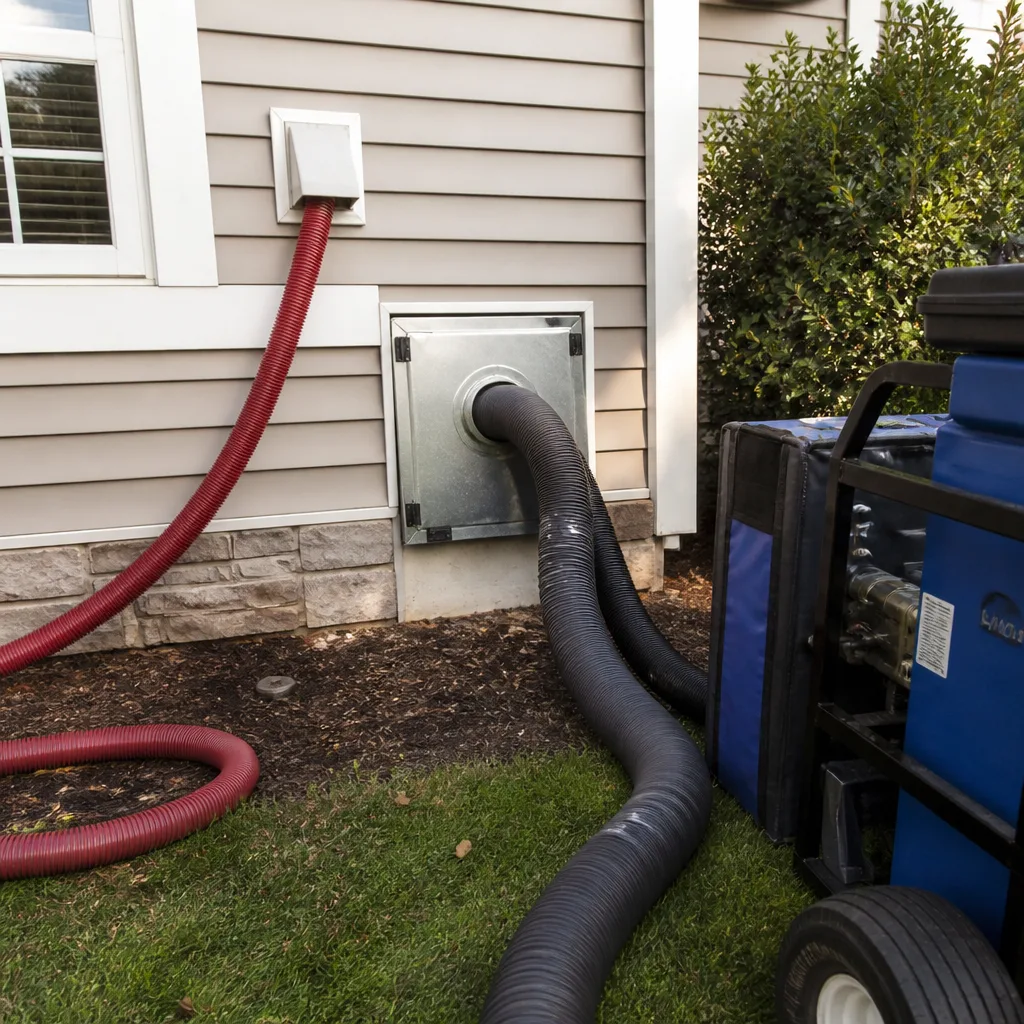 Whole-home duct cleaning
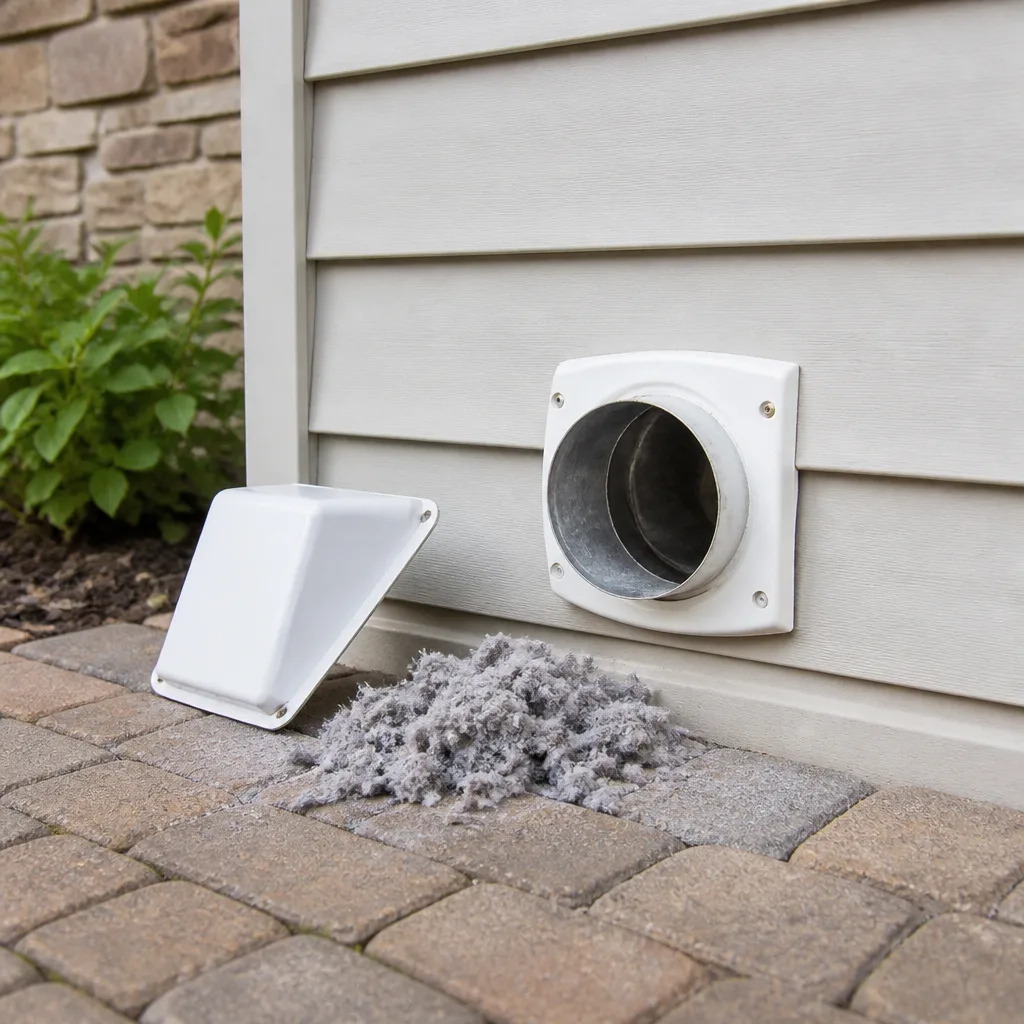 Dryer vent cleaning
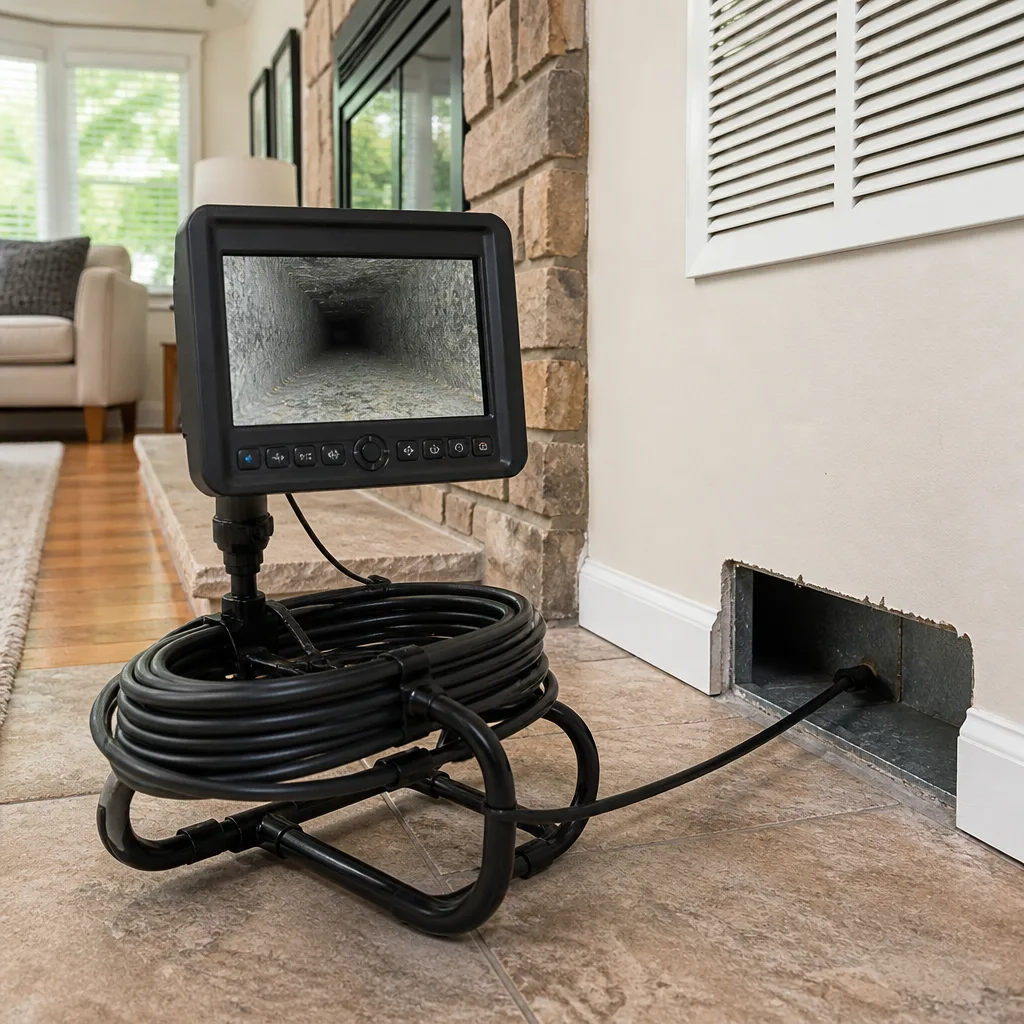 Camera inspection
 Sanitizing & deodorizing
Whole-system duct and dryer vent check with before-and-after photos - you see exactly what came out of your vents
That "$99 whole-house special" is a bait ad - the real number appears once they are in your hallway, or the "clean" is a shop-vac at the register. We photograph the inside of your ducts before and after instead.
The Complete Guide to Air Duct Cleaning in American Fork
Most homeowners in American Fork have never actually seen their ducts. They’ve seen the vent covers, maybe vacuumed the grille now and then, and assumed that’s the whole system. It isn’t. Your home has roughly 150 or more linear feet of sheet metal hidden inside walls, ceilings, and floors, and every cubic foot of heated or cooled air passes through it before it reaches you. What sits in that air path matters far more than what’s visible at the register. This guide pulls back the sheet metal: how your duct system is actually built, what a real full-system clean involves, which local factors load American Fork ducts with debris, and how to tell a genuine source-removal job from a surface wipe. By the end you’ll know exactly what to ask before you hire anyone.
Quick Answer
Professional air duct cleaning in American Fork means source-removal cleaning of the entire air path – supply and return ducts, the plenum, register boots, and the HVAC unit itself – using contractor-grade contact equipment under negative pressure. It typically takes several hours and the price is set per system by a written estimate after an inspection. A clean of the vent covers alone is not duct cleaning; the contamination usually sits deeper in the run, where a shop vacuum never reaches.
Styles & brands we work with
- Whole-home duct cleaning
- Dryer vent cleaning
- Camera inspection
- Sanitizing & deodorizing
Table of Contents
- What Your Duct System Is Actually Made Of
- Why American Fork Ducts Load Up Faster Than You’d Think
- What Professional Equipment Does That a Shop Vac Can’t
- Source Removal vs. Blow and Go
- How a Full-System Clean Works, Step by Step
- What Comes After the Clean: Sealing, Treating, Verifying
- How to Verify the Work Was Actually Done
- How Often Ducts Really Need Cleaning
What Your Duct System Is Actually Made Of
A residential duct system isn’t one pipe. It’s a network with distinct sections, and each one collects a different kind of debris and needs a different approach to get clean. Understanding the anatomy helps you see why a proper job takes hours rather than minutes, and why the vent cover is the least interesting part of the whole thing.
Most American Fork homes fall into two build eras, and each has its own duct profile. The ranch and split-level homes built from the 1980s through the 2000s typically run rigid galvanized sheet-metal trunk lines through the basement or crawlspace with round branch runs feeding floor registers. Newer builds – the kind going up across Traverse Mountain and the active subdivision zones on the city’s east side – often use flex duct for the branch runs, which is easier to route through tight framing but has a corrugated interior that traps dust and construction debris in every rib.
- The return side: Pulls air back to the furnace or air handler. Returns move the most volume and often run through wall cavities or a central chase. They’re frequently the dirtiest section and the one homeowners forget.
- The supply trunk: The main distribution line off the unit. Rigid sheet metal, larger diameter, usually accessible in a basement or crawlspace.
- Branch runs: Smaller ducts feeding individual rooms. Flex duct here has ridges and sags that collect debris and can be crushed or torn during careless cleaning.
- Register boots: The sheet-metal elbows where a duct meets the floor or wall grille. Debris settles at the bottom of the boot like silt in a bowl.
- The plenum: The box connecting the ductwork to the furnace or air handler. On older systems this is where the heaviest accumulation lives.
Each of these sections gets handled differently. A rigid trunk can take an aggressive contact brush; a sagging flex branch cannot. A metal boot needs hand work at the throat. That’s why a full-system approach matters – and it’s why a proper clean includes the entire air path, not just the easy trunk line.
Why American Fork Ducts Load Up Faster Than You’d Think
Utah Valley is a high desert basin, and that shapes what ends up in your ducts. Fine dust here is a fact of life – wind off the mountains and dry summer conditions lift particulate that finds its way into every gap, including the return grille. During winter inversions, that same fine material hangs in valley air. Add summer wildfire smoke drifting in from regional fires, and the filter has more to catch than it would in a wetter climate.
Then there’s construction. American Fork has been one of the busier building cities in the valley, with new subdivisions and phased neighborhoods going up east toward the mountains and along the growth corridors. Here’s what most people don’t realize: a brand-new home’s ducts are often contaminated before the family ever moves in. Drywall dust, sawdust, insulation fibers, and framing debris settle into the ductwork during construction. If the system was run before the home was finished – common during the drywall and finish phases to keep workers comfortable – that fine dust gets pulled into every branch run. The house is new; the air path is not clean.
A few more American Fork-specific factors to keep in mind:
- Dry air and static: Low humidity in the valley lets dust stay airborne longer, so it travels deeper before settling. Fine particles that would clump in a humid climate stay loose and ride into the system.
- Elevation and furnace run time: Cold winters mean the furnace runs hard for months, moving a lot of air through the same ductwork and concentrating whatever’s inside.
- Renovation cycles: Older homes going through kitchen or basement remodels push drywall and sawdust into returns if the system isn’t protected during the work.
The result is ducts that fill faster than you might expect. A home that’s been in the same family for fifteen years in American Fork can carry an accumulation you’d never guess from looking at the grille.
What Professional Equipment Does That a Shop Vac Can’t
The single biggest difference between professional work and a cheap crew is the equipment – and not just the vacuum, but the whole setup. Consumer vacuums and big-box blowers move air but don’t contain it. Professional systems do both: they agitate the duct interior to break debris loose and pull it out under negative pressure so it never re-enters your living space.
We run contractor-grade equipment from Rotobrush, Nikro, and Abatement Technologies – the same tools used by remediation and restoration specialists. Here’s what each piece contributes:
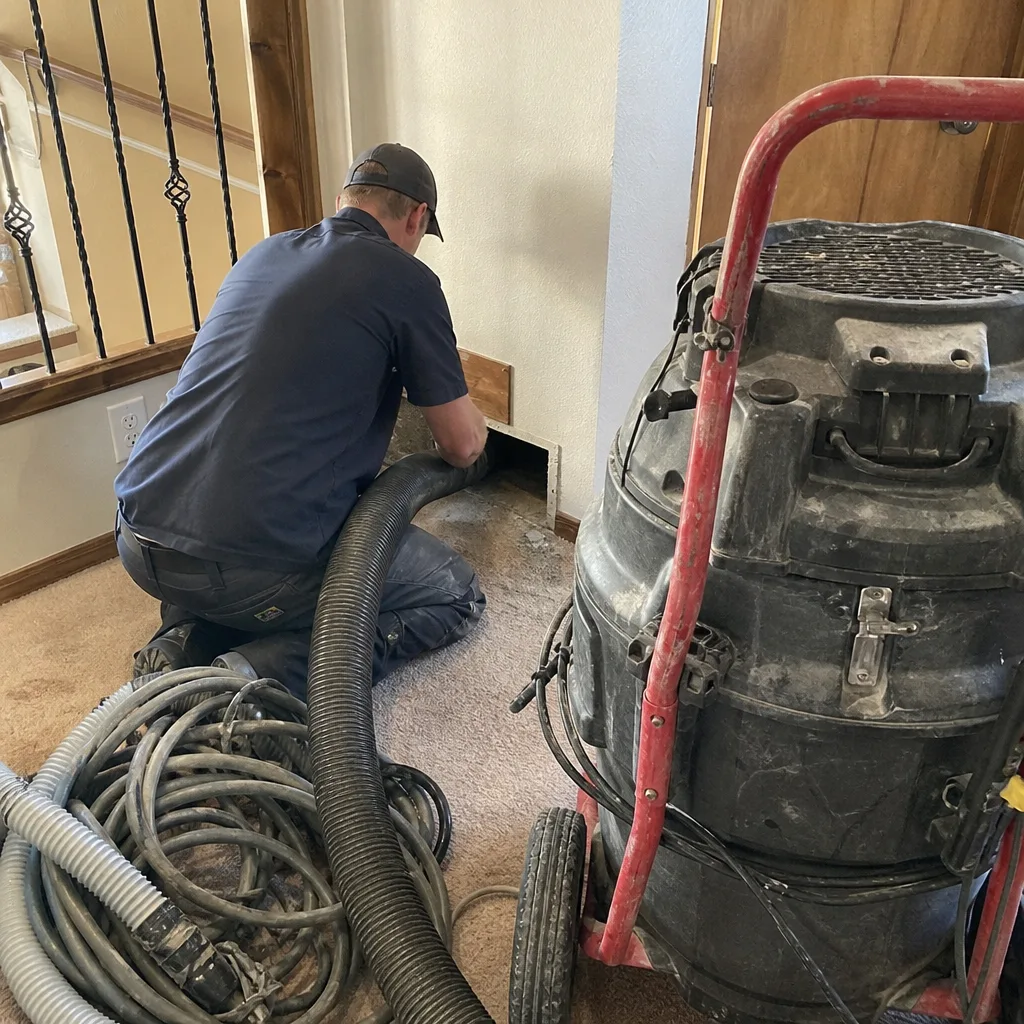
- American Fork Air Duct Cleaning equipment – Rotobrush contact cleaning: A rotary brush and whip system that physically contacts the duct interior, scrubbing the metal and flex surfaces to dislodge bonded dust rather than just pulling loose air. This is the industry standard for contact cleaning, and it’s the reason surface debris actually comes out.
- Nikro HEPA extraction: High-efficiency filtration on the vacuum side traps fine particulate – the stuff that would otherwise blow back through the system as you clean. HEPA filtration is what separates collection from recirculation.
- Abatement Technologies negative-pressure containment: This is the part most homeowners never see and most cheap crews don’t have. Negative pressure means the cleaning zone is held at lower pressure than the rooms around it, so dislodged debris flows toward the collection equipment instead of out into your kitchen. It’s the same principle remediation contractors use to keep a work area isolated.
Why does this matter at the register? Because a shop vac has no containment. A crew that shows up with a household vacuum and a brush is effectively stirring up decades of accumulation and letting some of it settle right back where it started. The equipment is the job. When you’re evaluating a contractor, ask specifically what machine they run – if they can’t name contractor-grade equipment, that tells you something.
Source Removal vs. Blow and Go
Source removal is cleaning that gets the contamination out of the system and into a collection unit. Blow and go is moving that contamination around and calling it done. They can look similar for the first few minutes. The difference shows up weeks later, when the dust returns because it never left.
Blow and go is the shortcut the industry is known for. The tell is simple: a crew arrives with a blower or a basic vacuum, runs air through the system for a short while, and leaves. Nothing is agitated at the surface, nothing is contained under negative pressure, and the debris that was stuck to the duct walls is now floating. Some of it gets pulled out through the return; much of it settles back into the same runs. The vent covers look clean. The system isn’t.
A source-removal clean takes the opposite approach. Every section of the air path is worked with contact equipment – the brush physically scrubs, the HEPA unit contains, the negative pressure keeps debris from escaping. The full air path is covered, including sections a blower would never reach. That work is slower and more involved, and it’s the only version that actually changes what’s in your ducts.
Here’s how to tell which one you got, after the crew leaves:
- Ask for before-and-after photos of your own ducts. A genuine source-removal crew can show you images of your system before they started and after they finished. If they can’t produce them, ask why.
- Look at the register boots. The bottom of a metal boot traps debris. If it’s still holding a visible layer, the boot wasn’t cleaned.
- Check the return grille and plenum area. Heavy accumulation lives here. It should look different after the service.
- Ask what equipment was used. If the answer is a generic vacuum, you didn’t get source removal.
We don’t just clean – we diagnose, repair, and treat. That means we look at the condition of the ducts, not just the debris inside them. A sagging flex run or a torn joint will keep pulling contamination in no matter how well it was cleaned, and that’s a problem a blow-and-go crew has no way to find.
How a Full-System Clean Works, Step by Step
Every full-system clean we do in American Fork follows the same basic sequence. It’s not a mystery, and knowing the steps is the best way to evaluate a quote. A real clean walks through the whole air path in order, with containment set up before any agitation begins.
- Inspection and assessment. We open access points, look inside the trunk, branches, returns, and plenum, and check the condition of the flex runs. This is where we find crushed branches, torn joints, or disconnected sections that need attention before cleaning.
- Set up containment. Negative pressure is established at the collection unit so the work zone is isolated from living space. This is the Abatement Technologies step – the one that keeps debris from flowing back into rooms.
- Contact-clean the supply and return runs. Rotobrush rotary brushes and whip lines work each duct interior. Rigid metal gets an aggressive pass; flex gets a gentler one to avoid damage. The boot at each register gets hand work, because the brush won’t turn the corner cleanly.
- Clean the plenum and HVAC unit air path. The box connecting the ductwork to the furnace or air handler is often the dirtiest part of the system. We clean the HVAC cleaning surfaces here too, including the blower and coil area where debris accumulates.
- HEPA extraction. The Nikro unit pulls everything dislodged into collection. Fine dust that would otherwise recirculate stays trapped.
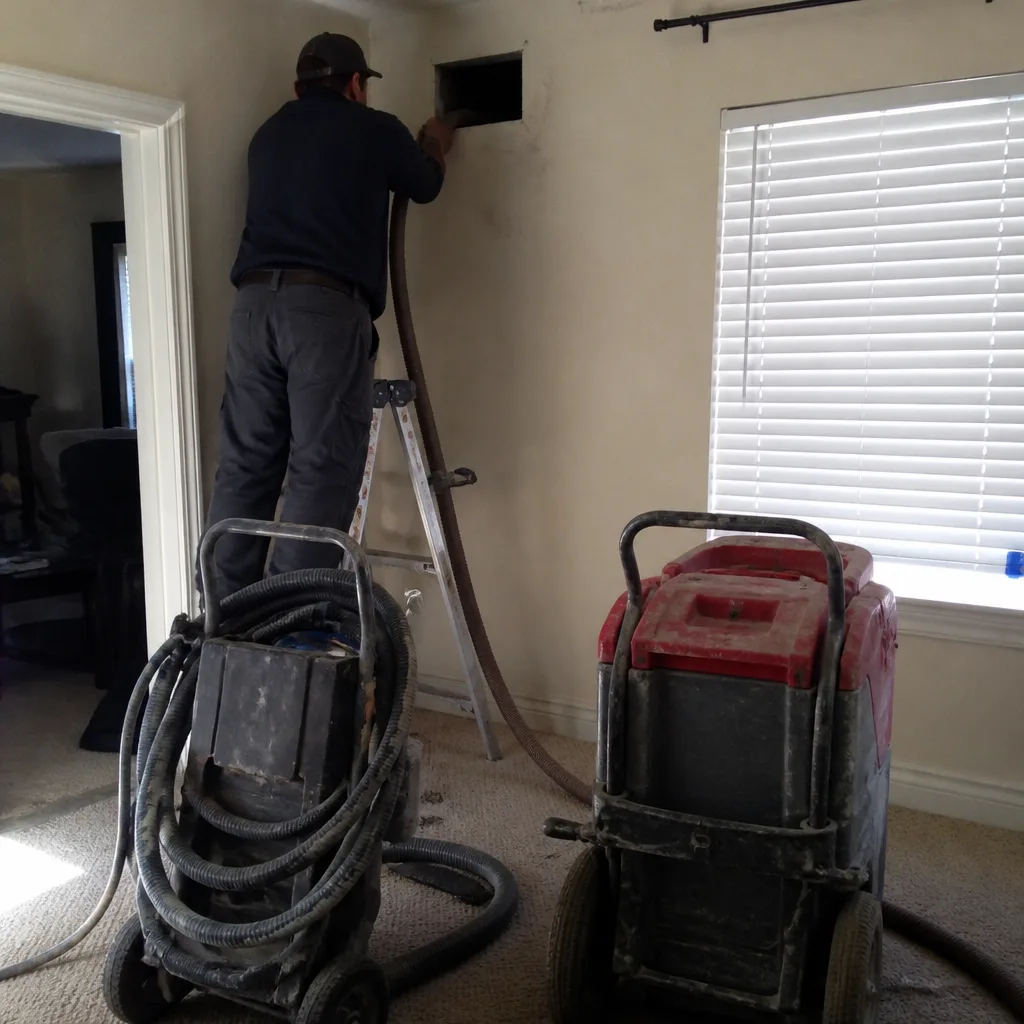
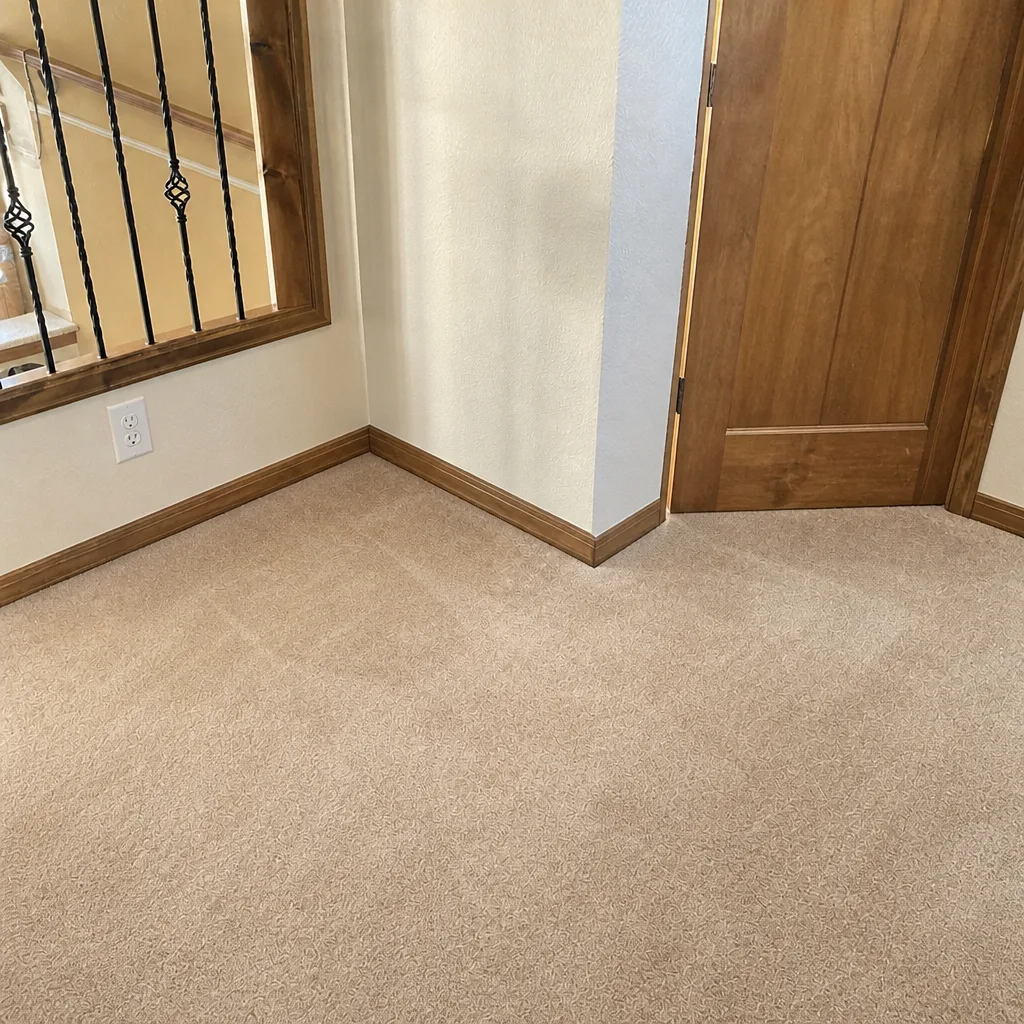
- Inspect and document. We check the results and photograph the before and after, so you can see the difference in your own ductwork.
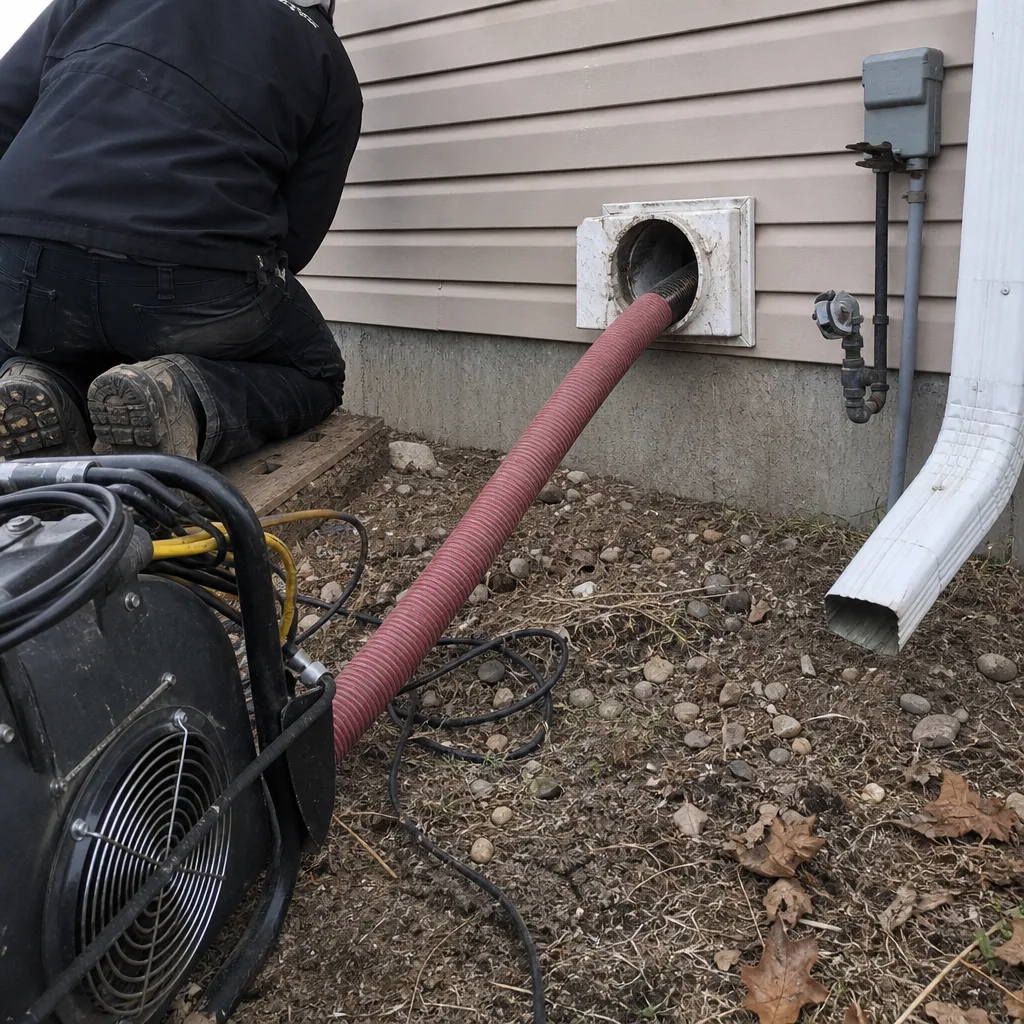
A full clean also covers the dryer vent, which most air duct crews skip entirely. The dryer vent cleaning side of the job matters for a different reason: lint accumulation in a dryer exhaust is a fire risk, and it’s a service that belongs in the same visit because it’s part of your home’s air-moving equipment. We handle both under one call.
What Comes After the Clean: Sealing, Treating, Verifying
Cleaning is the middle of the job, not the end. Clean ducts, sealed ducts, treated ducts – that’s the full three-step process, and skipping either of the last two steps means the problem comes back. A one-visit crew that cleans and leaves has removed today’s debris and left tomorrow’s contamination path wide open.
Sealing addresses the leaks that let contamination in and let conditioned air out. Gaps at joints, disconnected flex sections, and unsealed plenum connections are common in American Fork homes of every age. Every leak on the supply side loses heated or cooled air into a crawlspace or wall cavity; every leak on the return side pulls in dust from wherever it passes through. We repair and seal these as part of the air duct cleaning visit because a sealed system holds its cleanliness far longer than an unsealed one.
Treating is the sanitizing step. After the physical clean, we apply Guardsman-grade sanitizing treatments to inhibit microbial regrowth inside the ducts. That’s not a substitute for cleaning – it’s what comes after it, because a treatment applied over contamination doesn’t reach the surface. Once the ducts are clean and dry, the treatment has a surface to work with.
Verifying closes the loop. We check the result, photograph it, and walk you through what we found. If the system needs filtration or purification upgrades to keep it cleaner longer, we can recommend and install those using trusted IAQ brands – Honeywell and Aprilaire among them – because a clean system with the right filtration stays clean far longer than one that relies on a cheap fiberglass filter.
That last point is why the “returns within 18 months” pattern is so common. A cleaning without sealing and filtration is a temporary fix. The leaks pull debris back in, the filter lets fine particulate through, and the cycle restarts.
How to Verify the Work Was Actually Done
The industry’s bait-and-switch reputation exists for a reason. A homeowner who’s been burned once has a hard time trusting the next crew, and that’s fair. The good news is that verification is straightforward if you know what to ask. Here’s how to hold any contractor accountable, in American Fork or anywhere.
- Require before-and-after photos of your own system. Not stock photos from a brochure – images of your ducts, your boots, your plenum. A crew that does real contact work has these.
- Ask what equipment will be on site. Contractor-grade contact cleaning plus HEPA extraction plus negative-pressure containment is the honest answer. A generic vacuum is not.
- Confirm the written scope. The estimate should list what’s covered: supply runs, return runs, plenum, boots, HVAC unit air path, and whether the dryer vent is included.
- Watch the access points. Real cleaning requires opening the system at multiple points. If a crew never opens anything beyond the registers, they aren’t getting into the runs.
- Check the boots and returns afterward. Visible accumulation left in the boot means the boot wasn’t cleaned.
One flat price per system, agreed before work starts, is the other half of the trust equation. Per-vent pricing and low teaser quotes are how a modest bill turns into a large one once the technician is on site. We price the whole system in writing after the inspection, and the estimate is free.
How Often Ducts Really Need Cleaning
Most homes benefit from a full-system clean every few years, and some need it sooner. The honest answer is that frequency depends on your home, not a calendar – which is why no reputable contractor should give you a fixed schedule over the phone without looking at the system.
Consider cleaning sooner if any of these apply:
- You’ve just finished a renovation, remodel, or drywall project that ran while the HVAC was operating.
- You moved into a newly built American Fork home and the ducts were never cleaned after construction.
- You’re seeing visible dust at the registers shortly after cleaning or changing filters.
- There’s been water intrusion into the system or a microbial smell from the vents.
- Someone in the household has allergies or respiratory sensitivities and the filter changes aren’t helping.
- You’ve bought a previously owned home and don’t know the duct history.
- The heating and cooling system is noisy or inefficient, which can point to leaks or blockages in the air path.
Homes with pets, heavy foot traffic, or ongoing remodeling sit on the frequent end of that range. Homes with good filtration and no recent construction sit on the long end. The right move is to have the system inspected and let the condition of your ducts set the interval, rather than following a calendar that has nothing to do with your house.
Common Mistakes to Avoid
- Judging the job by the vent covers. The grille is the least important part of the system. Contamination lives in the trunk, returns, and boots, and if a crew only touches the covers, nothing has really changed. Look deeper before you pay.
- Accepting a per-vent price. Per-vent pricing sounds simple but encourages crews to skip the hard-to-reach sections and then charge for extras once they’re on site. A flat price per system agreed in writing avoids the whole trap.
- Hiring a crew without containment equipment. Abatement Technologies negative-pressure gear is what keeps dislodged debris from settling back into your home. Without it, cleaning is partly a redistribution job, and American Fork’s fine desert dust is exactly the kind that hangs in the air.
- Stopping after the clean. Unsealed leaks pull debris right back into the system, and untreated ducts can regrow microbial growth. Cleaning without sealing and treating is a temporary fix that tends to come undone within 18 months.
- Skipping the construction clean on a new build. Drywall dust and framing debris settle into new ducts long before move-in. Running the system during construction makes it worse. A new home deserves a duct clean, not an exemption from one.
- Ignoring the dryer vent. Lint buildup in the exhaust is a fire risk and a service many air duct crews don’t offer. If your crew doesn’t clean dryer vents, you’re leaving half the air-moving system untouched.
- Choosing on price alone. The cheapest quote is usually the one that skips equipment, containment, and steps. You’re paying for the work that actually gets done, not the number on the coupon.
See the difference
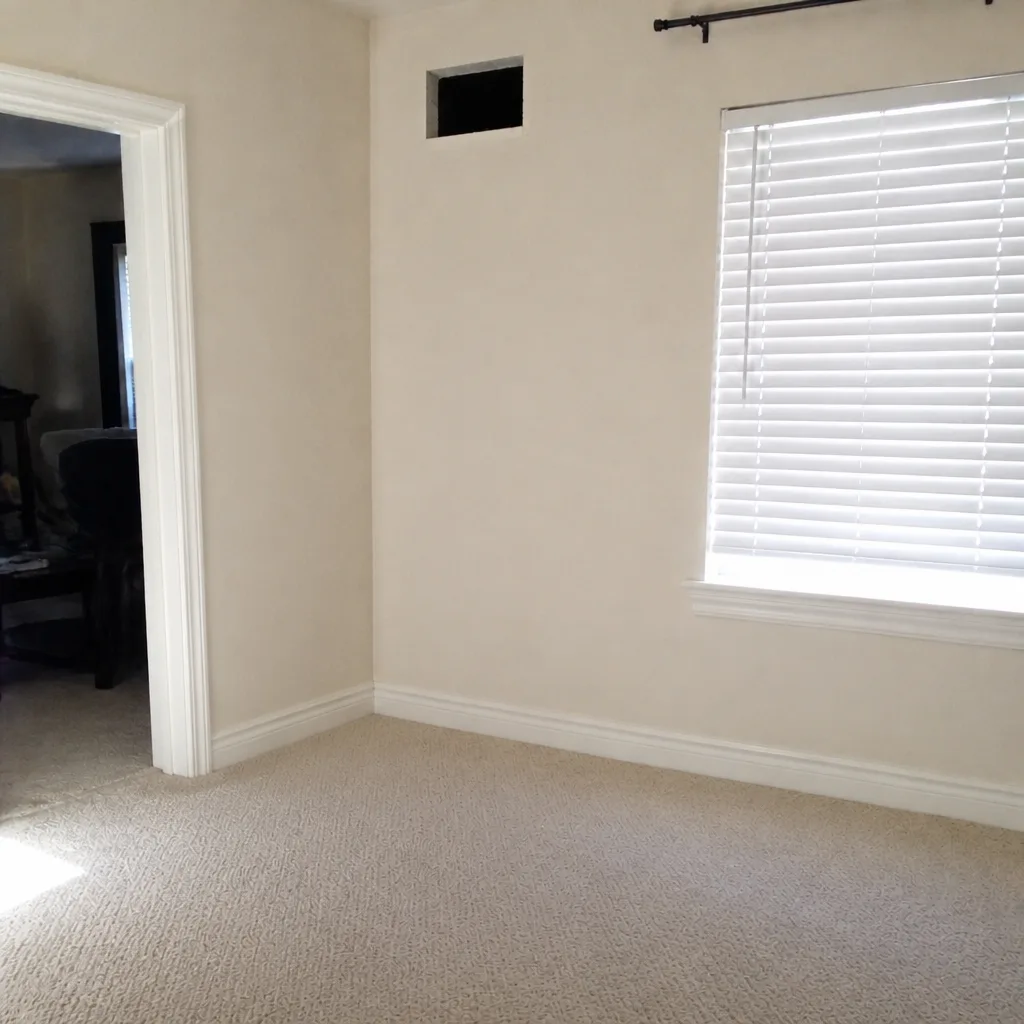
 Before
 After
 Before
 After
 Before
 After
When to Call a Professional
Some duct problems are ones you can spot from the living room. Visible dust settling on furniture shortly after cleaning, a musty smell from the vents when the furnace kicks on, a visibly dirty return grille, or an unusual noise in the system all point to a problem worth inspecting. Recent renovation, a new build that was never cleaned after construction, water intrusion, or allergy symptoms that don’t improve with filter changes are all reasons to bring in a professional who can actually see inside the system and document the condition. The American Fork Air Duct Cleaning team connects you with vetted local professionals who use contractor-grade equipment and set one flat price per system in writing. American Fork Air Duct Cleaning offers free estimates in American Fork – call (833) 918-6290. We answer 24/7. Fast dispatch from 7am to 7pm, Sunday through Friday.
Frequently Asked Questions
Air duct cleaning in American Fork is priced per system, not per vent, and the final price is set by a written estimate after the technician inspects the layout and condition of your ductwork. Whole-system cleaning typically falls into a range based on square footage, the number of runs, and whether the system needs repair or sealing as well as cleaning. We don’t quote per-vent prices because that structure rewards skipping the hard sections. Call (833) 918-6290 for an exact quote – estimates are free.
A full-system clean usually takes several hours, and the exact time depends on home size, how many runs the system has, and whether flex branches or damaged sections need special handling. A straightforward single-story ranch runs faster than a multi-level home with a long return chase. We don’t rush the contact work, because the brush passes over every section are what actually remove bonded debris. Call (833) 918-6290 to schedule an inspection and get a time estimate for your system.
Source removal extracts contamination from the system into a HEPA collection unit under negative pressure; blow and go stirs it up and lets it settle back in. The difference shows in the vent boots, the returns, and the photos a crew can produce afterward. A genuine source-removal job uses contact equipment like Rotobrush brushes and Abatement Technologies containment, not a shop vacuum. If a contractor can’t name their equipment, ask hard questions before hiring. Call (833) 918-6290 to talk through what a full-system clean includes.
Yes, often. Construction debris – drywall dust, sawdust, insulation fibers – settles into the ductwork during building, and running the HVAC during construction pulls that material deep into the branch runs. The house is new but the air path isn’t clean. Many of American Fork’s active subdivisions have homes that benefit from a post-construction duct clean before the family ever occupies them. Call (833) 918-6290 for a free estimate on a new-build clean.
Ask for before-and-after photos of your own ducts, boots, and plenum – not stock images. Look at the bottom of a register boot and the return grille after the crew leaves. Confirm what equipment was used and check the written scope against what actually happened. A crew that did real contact work has the images and the equipment records to prove it. Call (833) 918-6290 if you want a second opinion on a job that didn’t feel complete.
Every few years for most homes, sooner if you’ve remodeled, moved into a new build, notice dust returning quickly, or have allergy symptoms that don’t improve with filter changes. There’s no universal calendar; the condition of your ducts sets the interval. Sealing and proper filtration stretch the time between cleans considerably. Call (833) 918-6290 for an inspection and an honest recommendation on timing.
The Bottom Line
Your HVAC system is only as clean as the air path running through it, and the air path is mostly hidden. A full-system clean means contact cleaning of the supply and return runs, the plenum, the boots, and the HVAC unit air path, all done under negative pressure with contractor-grade equipment. What sets a real job apart is what happens after: sealing the leaks that let contamination back in, treating the ducts to inhibit regrowth, and verifying the result with photos of your own system. One flat price per system, agreed in writing, is the way it should be priced. Clean ducts, sealed ducts, treated ducts – anything less is a temporary pass.
Written by the team at American Fork Air Duct Cleaning.