
Last updated November 24, 2026
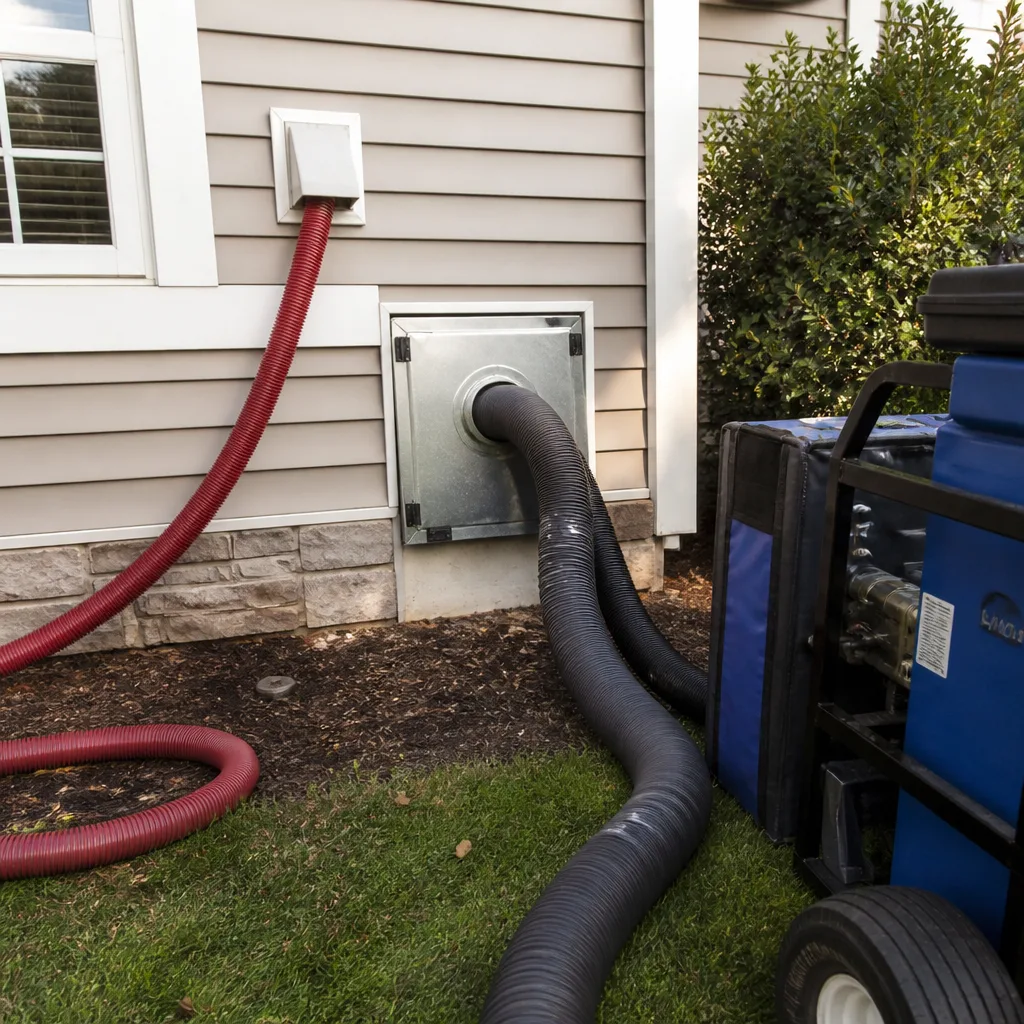 Whole-home duct cleaning
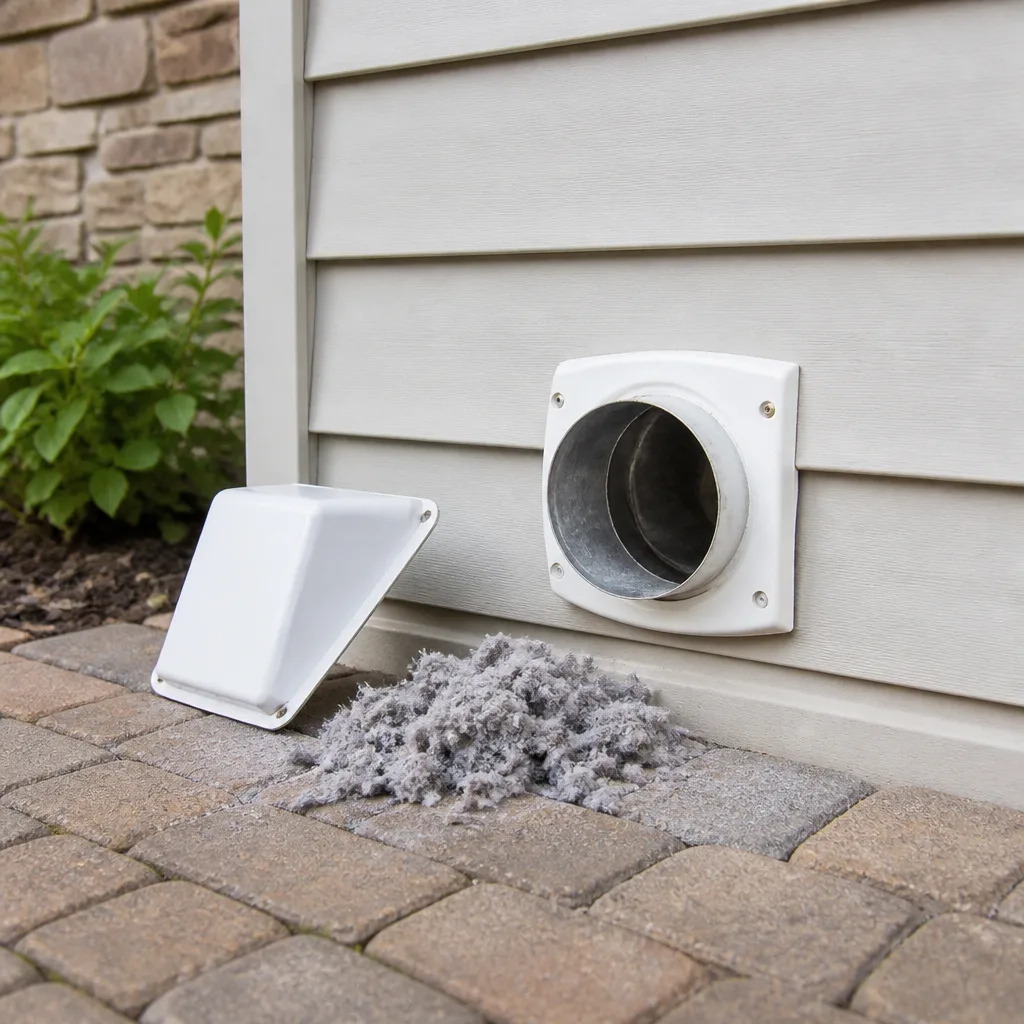 Dryer vent cleaning
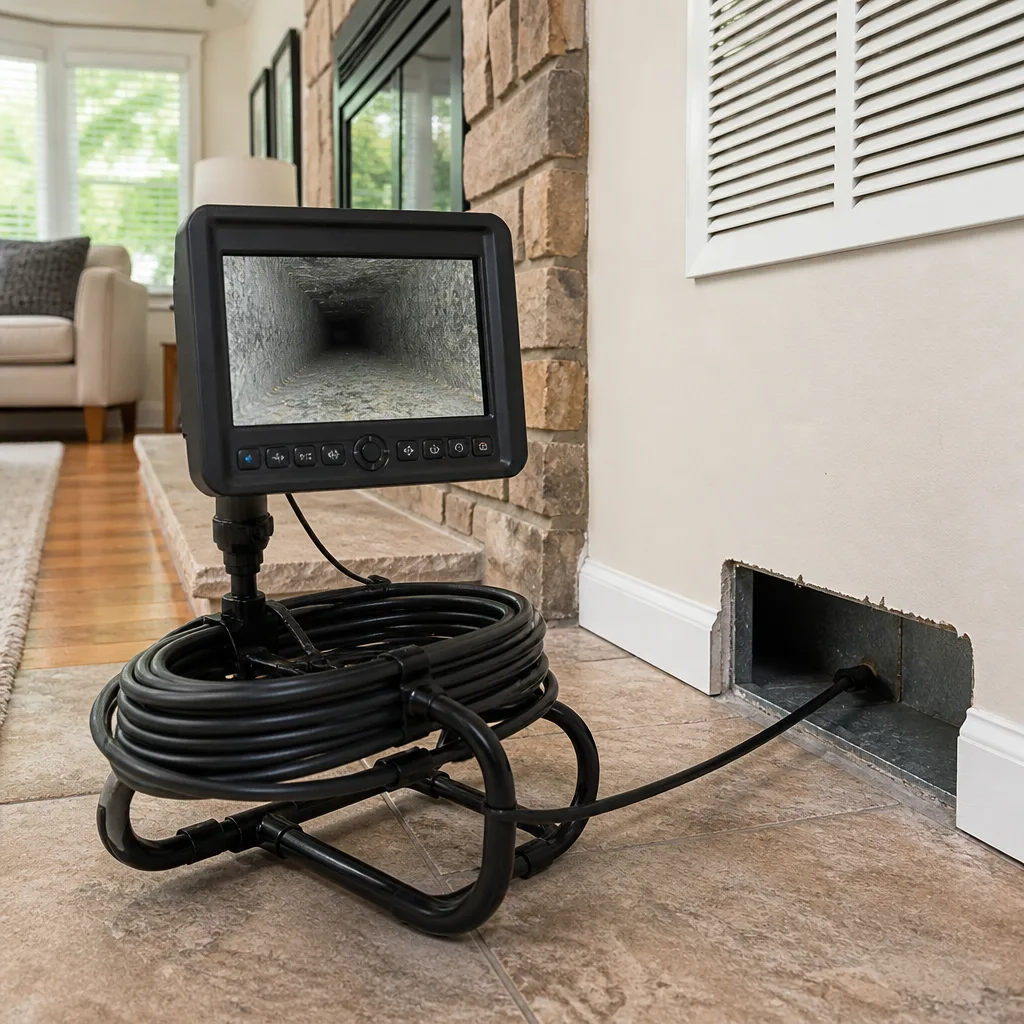 Camera inspection
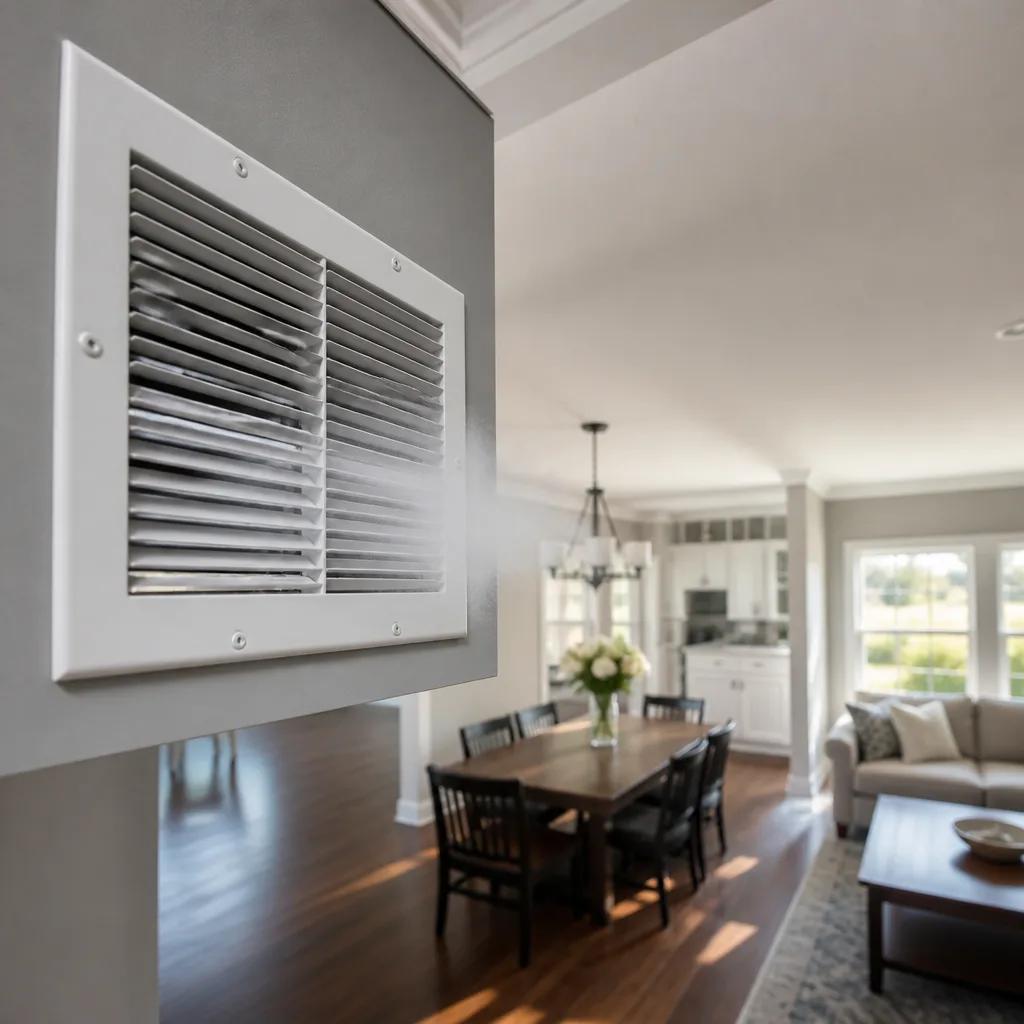 Sanitizing & deodorizing
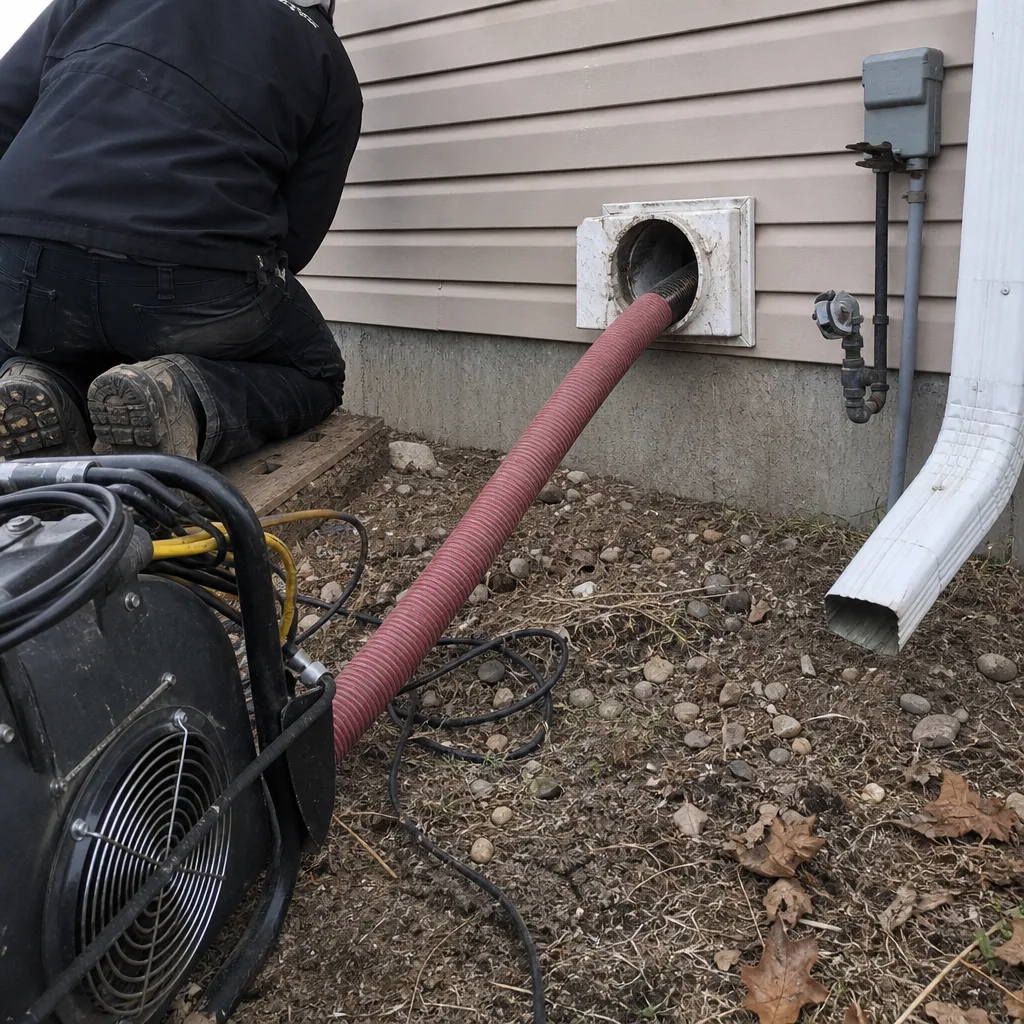
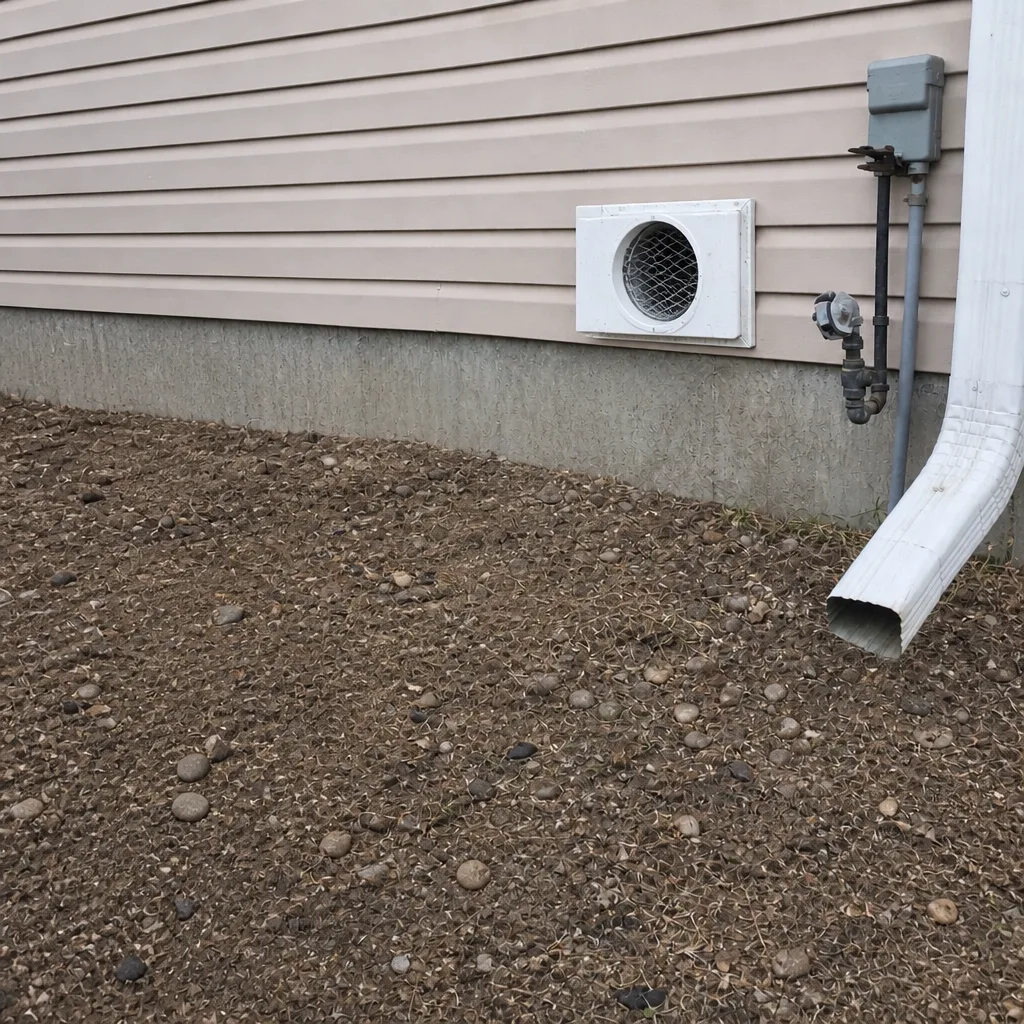
Whole-system duct and dryer vent check with before-and-after photos - you see exactly what came out of your vents
That "$99 whole-house special" is a bait ad - the real number appears once they are in your hallway, or the "clean" is a shop-vac at the register. We photograph the inside of your ducts before and after instead.
Seasonal Air Duct Cleaning Care for American Fork: Year-Round Homeowner’s Guide
Most homeowners think about duct cleaning once a year, usually when something already smells wrong. That schedule misses the point. In American Fork, the air path through your HVAC system faces four different kinds of contamination across a single year, and each one loads the ducts in a different way. Utah Valley’s winter inversion season settles fine particulate into return ducts for months. The summer wildfire window pushes smoke through the same system your air conditioner is recirculating. Fall construction dust arrives from every direction in a growing city. Winter traps everything in a closed house with no fresh air dilution. A single annual clean treats all four the same, which means you either clean too early or too late. This guide walks through what actually happens in American Fork ductwork season by season, what to inspect, when to book a professional, and how to time filter swaps and cleaning to the moments your system genuinely changes over.
Quick Answer
Seasonal air duct cleaning care in American Fork means matching the right maintenance task to the right season: inspect in early spring after inversion season, clean before summer A/C recirculates the winter load, address construction dust in fall, and monitor air quality closely through winter’s closed-house cycle. The right window for a full professional clean is usually late spring, with duct repair and sealing in fall and sanitizing after any physical clean. Filter changes should track your system’s actual switchover to heat or cooling, not the calendar.
Styles & brands we work with
- Whole-home duct cleaning
- Dryer vent cleaning
- Camera inspection
- Sanitizing & deodorizing
Table of Contents
- Spring: Post-Inversion Assessment and Pre-Summer Cleaning
- Summer: Wildfire Smoke Infiltration and What Filters Can’t Fix
- Fall: Construction Dust, Remodel Season, and Sealing the System
- Winter: Closed-House Cycle and Air Quality Indicators
- Transition Tasks Between Seasons
- How the Full System Fits Together
- Common Mistakes to Avoid
- When to Call a Professional
Spring: Post-Inversion Assessment and Pre-Summer Cleaning
Spring in American Fork carries a specific job that most homeowners overlook. Between roughly March and May, the same system that ran heat all winter is about to switch to cooling, and everything the winter loaded into the return ducts is about to recirculate through the living space for the first warm months. Utah Valley’s winter inversions trap fine particulate near the valley floor for extended stretches, and much of that eventually settles into return air pathways because returns are, by design, the lowest-pressure point in the whole system. Spring is when you take stock of what’s accumulated.
What to check in spring, before the A/C gets switched on:
- Visible dust or discoloration inside the return register grilles in each room
- Dust settling on top of the furnace or air handler cabinet, especially around seams
- A musty or stale smell when the thermostat is bumped to cool
- Dust streaks on the supply diffusers in bedrooms and hallways
- The furnace filter’s condition – a filter loaded over six months of heat season tells you something about the dust load behind it
If two or three of those signs are present, spring is the right window for a full air duct cleaning. It’s also the right window for a duct inspection – older homes in American Fork have flex duct runs and mastic-sealed joints that can loosen over time, and a spring inspection catches a leaky joint before the cooling season pushes conditioned air into the crawlspace. We use Rotobrush contact cleaning to scrub duct interiors and Nikro HEPA extraction to pull the dislodged material out, because a proper spring clean is about removing the winter deposit, not just knocking dust off the surface. Once the system is clean, the switch to cooling sends clean air through, not a recirculated winter load.
Summer: Wildfire Smoke Infiltration and What Filters Can’t Fix
Summer in American Fork brings a different contamination category. Wildfire smoke from fires across the West drifts into the valley in stretches, and the standard response is to close the windows, run the A/C, and swap in a higher-MERV filter. That helps, but it addresses only part of the problem. Smoke particles are small enough that many bypass the filter at the cabinet seams, at loose duct joints, and at the return plenum. Once inside, those particles coat heat exchanger surfaces and the inside of the supply and return runs, where a filter can’t reach them. A MERV upgrade changes what enters the system going forward. It does nothing about what’s already sitting inside.
Where smoke infiltrates and how to think about the fix:
- Filter bypass at the cabinet. If the filter frame doesn’t seal tightly, smoke pulls past it. Check the gasket and frame seating.
- Loose duct joints. Returns in particular often run through unconditioned attic or crawlspace, where a small gap lets smoke in with the air the system is pulling.
- Heat exchanger surfaces. Coated surfaces lose efficiency, and summer is when the system is running hardest – which is exactly when a fouled coil costs the most.
- Return plenum and main trunk. This is where the bulk of smoke particulate accumuluates, and it’s also the section most cleaners never reach.
The right response is to clean what’s already inside, then upgrade filtration. During a smoke event, we recommend containment-based cleaning using Abatement Technologies negative-pressure equipment – the same approach remediation contractors use – so that dislodged debris never re-enters your living space mid-clean. After a full clean, a Honeywell or Aprilaire filtration upgrade makes sense because the system is now clean enough that higher filtration pays off rather than just trapping more on top of an already-coated interior.
Fall: Construction Dust, Remodel Season, and Sealing the System
Fall is when American Fork’s active building market shows up inside people’s ductwork. New construction nearby, renovations on the same block, and a homeowner’s own pre-winter project all push fine gypsum and wood dust into the air for weeks. That dust enters HVAC systems because supply registers and returns are open to the room, and a dusty construction season loads ductwork faster than almost anything else. The moment is easy to miss because the dust settles quietly, and by the time the heat comes on in November, the deposit is already sitting in the return trunks and the supply runs.
Fall is also the right window for HVAC cleaning, because the heat exchanger, blower wheel, and evaporator coil are about to switch roles. A dusty blower wheel pushes less air. A fouled evaporator coil holds moisture differently. A coated heat exchanger runs hotter than it should. Cleaning the whole air path, not just the ducts, matters because the ducts and the unit are the same system. Fall is also when duct repair and sealing has the most value: sealing leaky joints in the attic and crawlspace before winter means the system isn’t pulling cold, dusty, unconditioned air into the return every time the furnace runs.
What fall care looks like in American Fork:
- Clean ducts and HVAC unit after any renovation, before the first heat cycle
- Seal joints and connections in attic and crawlspace duct runs before the heating season
- Replace the furnace filter at the moment the system switches from cooling to heat, not a month after
- Consider a Guardsman-grade sanitizing treatment after the physical clean to inhibit microbial regrowth in the clean duct
- Book the fall service before the first snow, when schedules fill up
Winter: Closed-House Cycle and Air Quality Indicators
Winter in American Fork puts the whole system into its hardest mode: continuous operation with no fresh air dilution. Windows stay closed, doors stay closed, and every hour the furnace runs pulls air through the same ductwork that’s been collecting particulate since spring. In an open-window season, a small dust deposit inside a return trunk gets diluted by fresh air. In winter, it doesn’t. It recirculates. That’s why winter is the season when “our house smells stale” or “I’ve been sneezing more” complaints show up – the system is finally giving you the accumulated picture.
Air quality indicators to watch during the closed-house cycle:
- Odor on startup. A brief dusty or musty smell when the furnace first fires each cycle means the heat exchanger or duct interior is coated.
- Visible dust from registers. If you can see dust puffing out of supply diffusers when the blower starts, the ducts are shedding.
- Increased allergy symptoms. Symptoms that worsen indoors over winter, when outdoor allergens are low, point to an indoor source.
- Static and dry air. Low humidity combined with heavy dust load makes the sensation of stale air worse.
- Filter loading speed. A filter that loads in weeks instead of months tells you what’s behind it.
Winter is generally not the right window for a full clean – it’s cold, disruptive, and the deposit is still being added to. But it is the right window to monitor, to set the spring booking, and to plan a sanitizing treatment if microbial smells are present. If a smell or symptom is clearly tied to the system, winter is also a fine time to schedule the assessment, so the clean happens on the first warm window in spring.
Transition Tasks Between Seasons
The tasks most homeowners get wrong aren’t seasonal – they’re transitional. The right time to change a filter isn’t a calendar month; it’s the moment your system switches from cooling to heating or the reverse. In American Fork, the first heat milestone usually arrives in October and the first cooling milestone in May, but the exact week depends on the year and the house. Watch your own system rather than the calendar.
The four transition tasks worth getting right:
- Cooling-to-heat filter swap. Replace the filter the week the thermostat first calls for heat, not a month later. The first heat cycle is when any accumulated filter load gets pushed through.
- Heat-to-cooling filter swap. Same logic, reversed. Replace the filter before the first cooling call so a spring-loaded filter isn’t asked to handle summer volume.
- Pre-season inspection. A short walk-around before each switchover: registers, seams, cabinet dust, smell test. Ten minutes catches what a mid-season surprise would otherwise cost.
- Post-event assessment. After any major event – a renovation, a smoke week, a heavy pollen stretch – inspect returns and grilles. Seasonal schedules don’t capture one-time loads.
We’ve seen this pattern across plenty of American Fork homes: the homeowner who tracks switchovers instead of calendar months ends up cleaning less often overall, because the cleans land at the moments when the most contamination actually gets removed. The homeowner who waits for “spring cleaning” season gets a clean that arrives after the A/C has already been recirculating for weeks. There’s also a link between the duct side and a service many people forget: dryer vent cleaning should be on the same seasonal checklist, because winter’s closed-house cycle is also when lint loads in a dryer vent go unnoticed until they become a fire risk.
How the Full System Fits Together
A year-round care plan is a sequence, not a single service. Clean ducts, sealed ducts, treated ducts – that’s the order, and each step depends on the last. Cleaning removes the accumulated particulate. Sealing closes the leaks that let new particulate bypass the filter in the first place. Treating, done after both, applies a Guardsman-grade sanitizer that inhibits microbial regrowth inside a duct that’s now clean and sealed. Doing these out of order wastes the work: sanitizing an unsealed duct just coats a surface that’s going to keep pulling dirty air.
Where each service fits in the cycle:
- American Fork Air Duct Cleaning – late spring, before the first cooling cycle, to remove the winter load
- HVAC cleaning – fall, before the first heat cycle, to clean the blower, coil, and heat exchanger alongside the ducts
- Duct repair and sealing – fall, after cleaning, before the heating season exposes leaks to a pressurized system
- Air quality and sanitizing – after any physical clean, when the ducts are clean and sealed
- Dryer vent cleaning – once a year, ideally at the same time as the main duct service
The value of using one contractor for all five is that they stay in the same system. A duct cleaner who only cleans can’t tell you your return trunk is leaking. A sealing crew that doesn’t clean first seals over a dust load. Keeping the air path in one set of hands means the diagnosis, the repair, and the treatment actually talk to each other. Our technicians have up to 13 years of experience across the full air path, and we work with the brands remediation contractors use – Rotobrush, Nikro, Abatement Technologies – because the duct interior is a working environment, not a surface to sweep.
Common Mistakes to Avoid
- Treating duct cleaning as an annual event on the calendar. The calendar doesn’t know your system. Late spring and early fall are the two windows that actually catch the biggest loads in American Fork, and one annual clean in the wrong month does less than two well-timed ones.
- Upgrading to a MERV 13 filter without addressing the system’s existing contamination. A high-MERV filter strains an already-coated system. Clean first, then filter up. Otherwise you pay more for restricted airflow and no cleaner air.
- Sanitizing before sealing. A sanitizer applied to an unsealed duct has a short life. Seal the leaks first, then treat – the treatment stays where it’s meant to stay.
- Ignoring duct leaks because the rooms “feel fine.” Attic and crawlspace runs in American Fork lose conditioned air constantly, and the loss doesn’t always show up as a hot or cold room. It shows up as a higher gas bill in winter and a dirty return in spring.
- Skipping the return side. Supply diffusers get the attention because they’re visible. Returns collect the bulk of fine particulate. If a cleaning proposal only covers supplies, it’s not covering the system.
- Timing the filter change by month instead of by switchover. October in one year and November in the next aren’t the same. Watch the thermostat, not the wall calendar.
- Ignoring the dryer vent when booking duct cleaning. It’s the same air path story, but with a fire-risk consequence. Bundle it with the duct service so it doesn’t slip to “next year.”
When to Call a Professional
Some of the work in this guide is the homeowner’s job – checking registers, watching for switchover weeks, replacing filters, noticing smell. The rest needs a trained technician and containment-grade equipment. Call a professional when you see two or more visible dust signs in the same season, when there’s an odor on startup that doesn’t clear within a minute, when a renovation has just finished and the system ran through it, when a smoke event has coated your home for a week or more, when you’ve noticed a rise in indoor allergy symptoms over winter, or when you’re planning a filter upgrade and want to know whether the system inside is clean enough to justify it. American Fork Air Duct Cleaning offers free estimates in American Fork – call (833) 918-6290. We answer 24/7. Fast dispatch from 7am to 7pm, Sunday through Friday. One flat price per system agreed before work starts, and before-and-after photos of your own ducts, so you know what was actually done.
See the difference
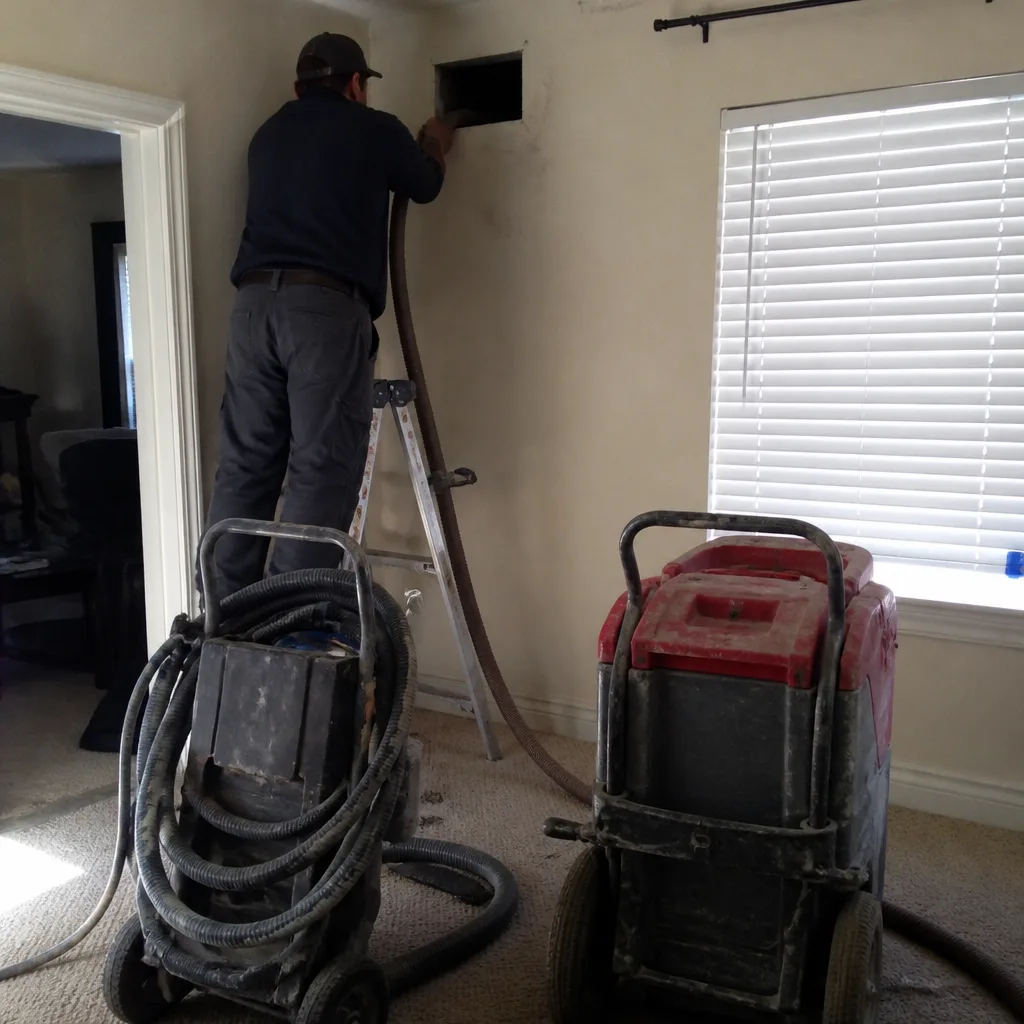 Before
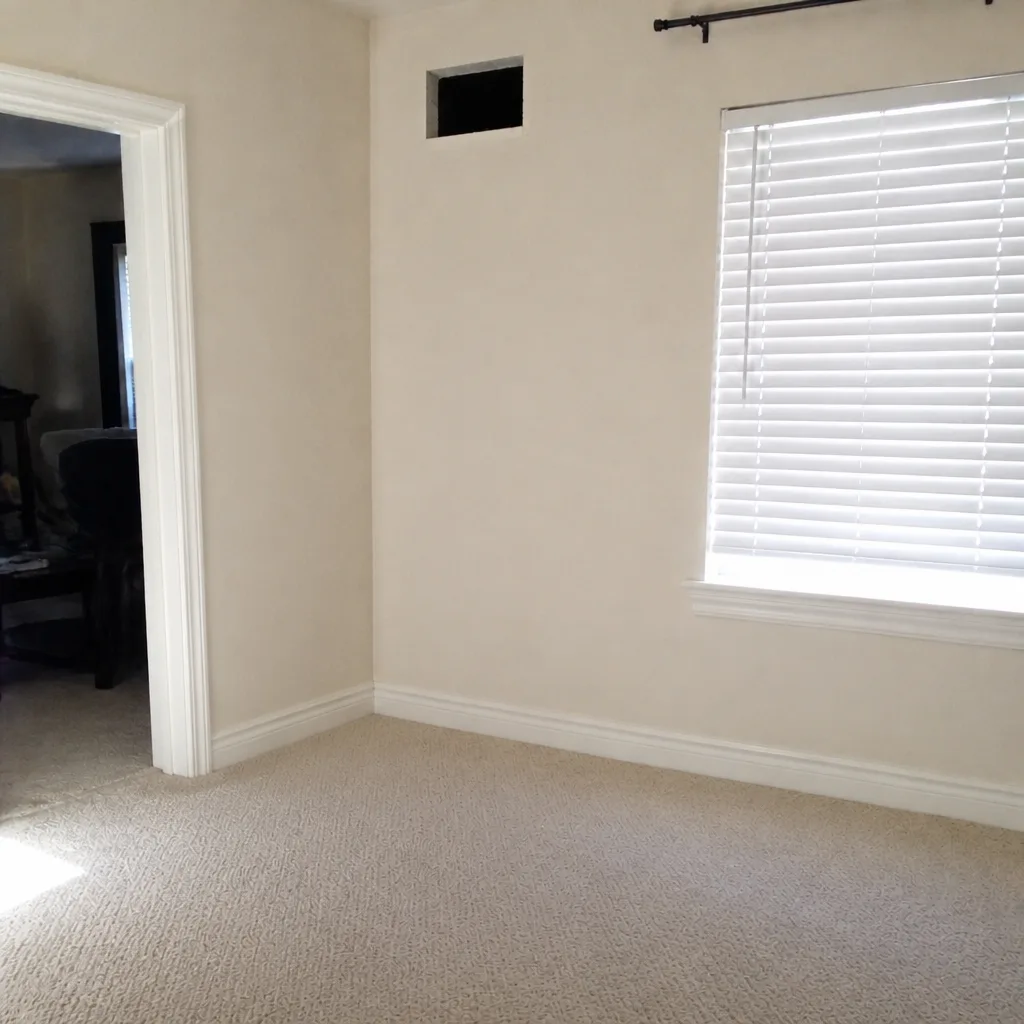 After
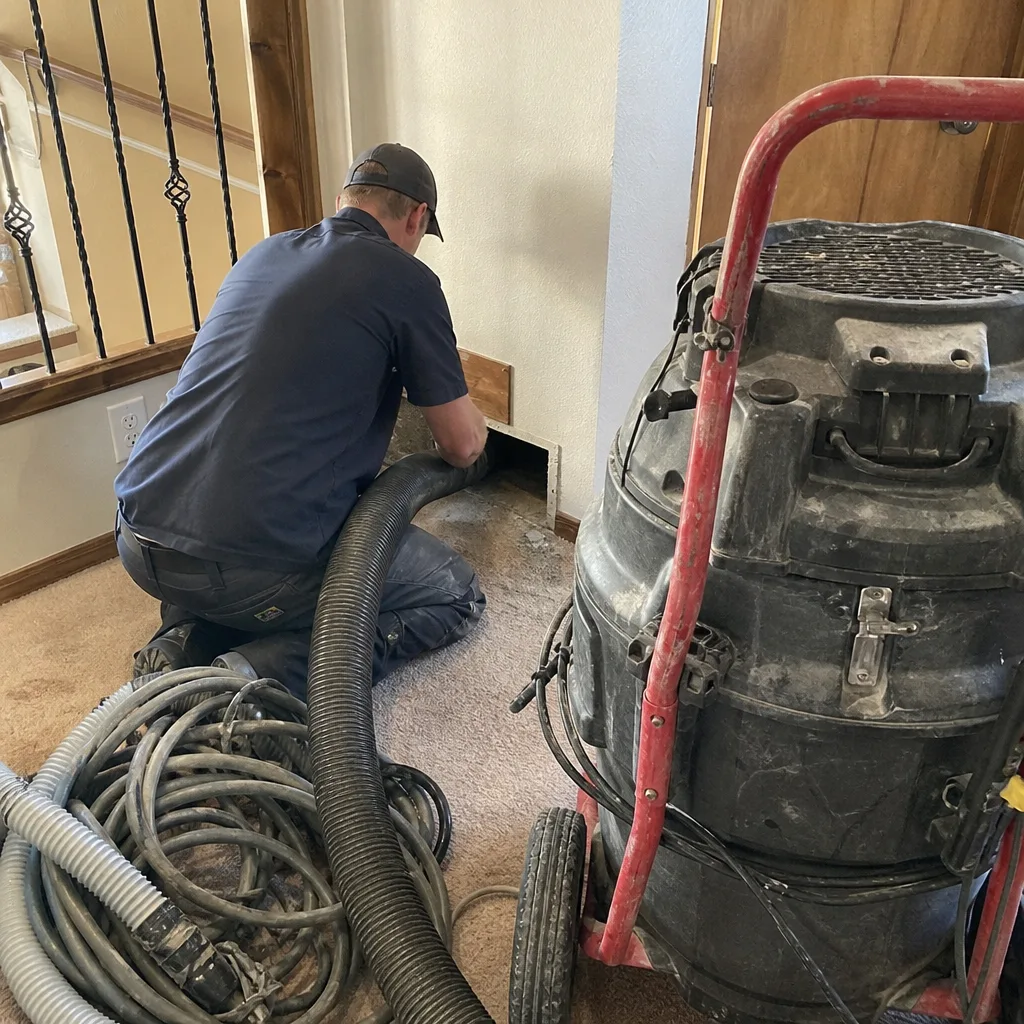 Before
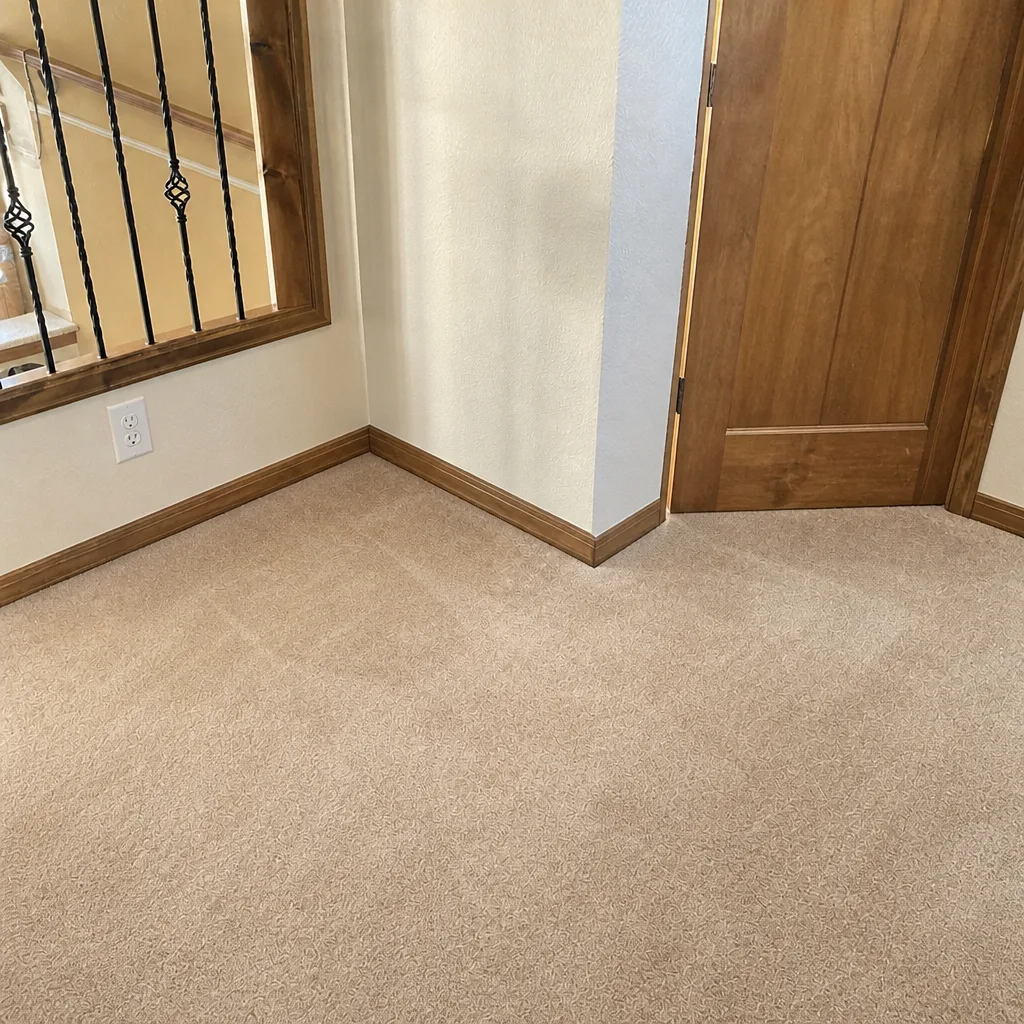 After
 Before
 After
Frequently Asked Questions
Most American Fork homes are well-served by a full duct clean roughly every two to three years when the seasonal cycle is managed properly. Homes in active construction zones, homes with pets or allergy sufferers, and homes that just finished a remodel often need it sooner – sometimes annually for a stretch. The better question than “how often” is “when”: one well-timed late-spring clean after inversion season removes more than two poorly-timed cleans. Call (833) 918-6290 for a free estimate – we’ll tell you what the system actually looks like.
Yes. Utah Valley’s winter inversions trap fine particulate near the valley floor for extended stretches, and returns are the lowest-pressure point in the system, so that particulate works its way in over months. By spring, the return trunks and main plenum can carry a load that wasn’t there in the fall. That’s the reason spring cleaning has more value here than it does in a valley without inversion cycles. Call (833) 918-6290 for a free estimate.
No. A higher-MERV filter changes what enters the system going forward; it doesn’t touch what’s already on the duct interior or the heat exchanger. Smoke particulate that bypassed the filter frame or leaked in at a duct joint stays inside until it’s physically removed by contact cleaning and HEPA extraction. Clean first, then upgrade the filter. Call (833) 918-6290 for a free estimate.
After, in almost every case. Construction dust keeps entering the ducts through open registers and returns for the duration of the project, and cleaning mid-project just means cleaning again at the end. The exception is a system that was already dirty before the remodel started – in that case a pre-project clean makes sense so construction dust isn’t layered on top of an older deposit. Call (833) 918-6290 for a free estimate.
Duct cleaning covers the ducts themselves – supply and return runs, grilles, and the plenum. HVAC cleaning covers the air handler, blower wheel, evaporator coil, and heat exchanger – the equipment that moves and conditions the air. The two are parts of the same air path, and a proper care plan addresses both. A cleaning that only touches one side leaves the other as a fresh contamination source. Call (833) 918-6290 for a free estimate.
We price per job by written estimate, not by the vent or by a teaser coupon figure. The written estimate is the final price, agreed before work starts. Whole-system work typically depends on the layout of the home, the number of runs, the condition found during inspection, and whether duct sealing or sanitizing is part of the scope. Call (833) 918-6290 – estimates are free.
The Bottom Line
American Fork’s four-season climate doesn’t produce a single duct contamination problem – it produces four, and they don’t resolve on the same schedule. Spring cleaning removes the winter inversion load before summer A/C recirculates it. Summer smoke care is about cleaning what a filter upgrade can’t reach. Fall is construction dust and duct sealing. Winter is monitoring and setting the next spring booking. Filter swaps should track your system’s actual switchovers, not the calendar. Clean ducts, sealed ducts, treated ducts – in that order, timed to the season that produced the load. Get the sequence right and a single properly timed visit across the year does more than two misplaced ones.
Call (833) 918-6290. We answer 24/7. Fast dispatch from 7am to 7pm, Sunday through Friday.
Written by the team at American Fork Air Duct Cleaning.