
Last updated November 24, 2026
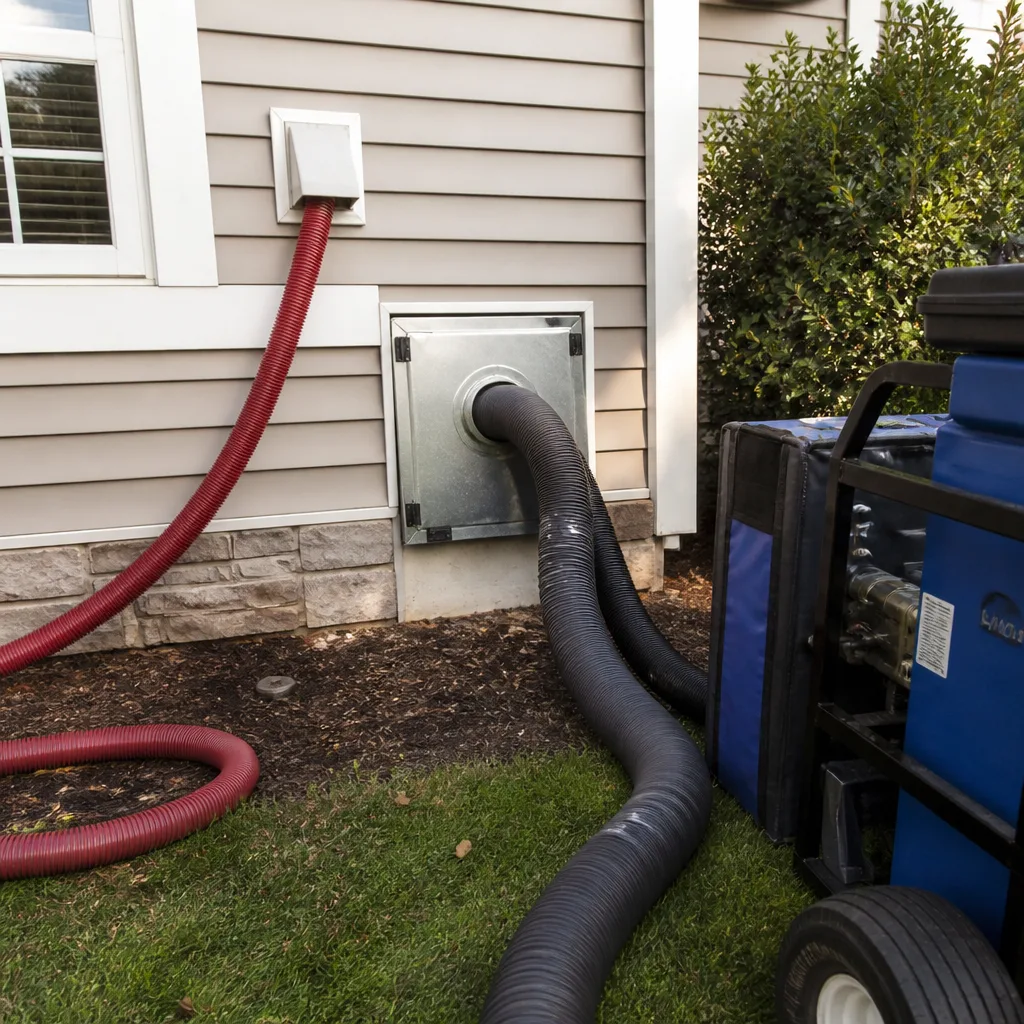 Whole-home duct cleaning
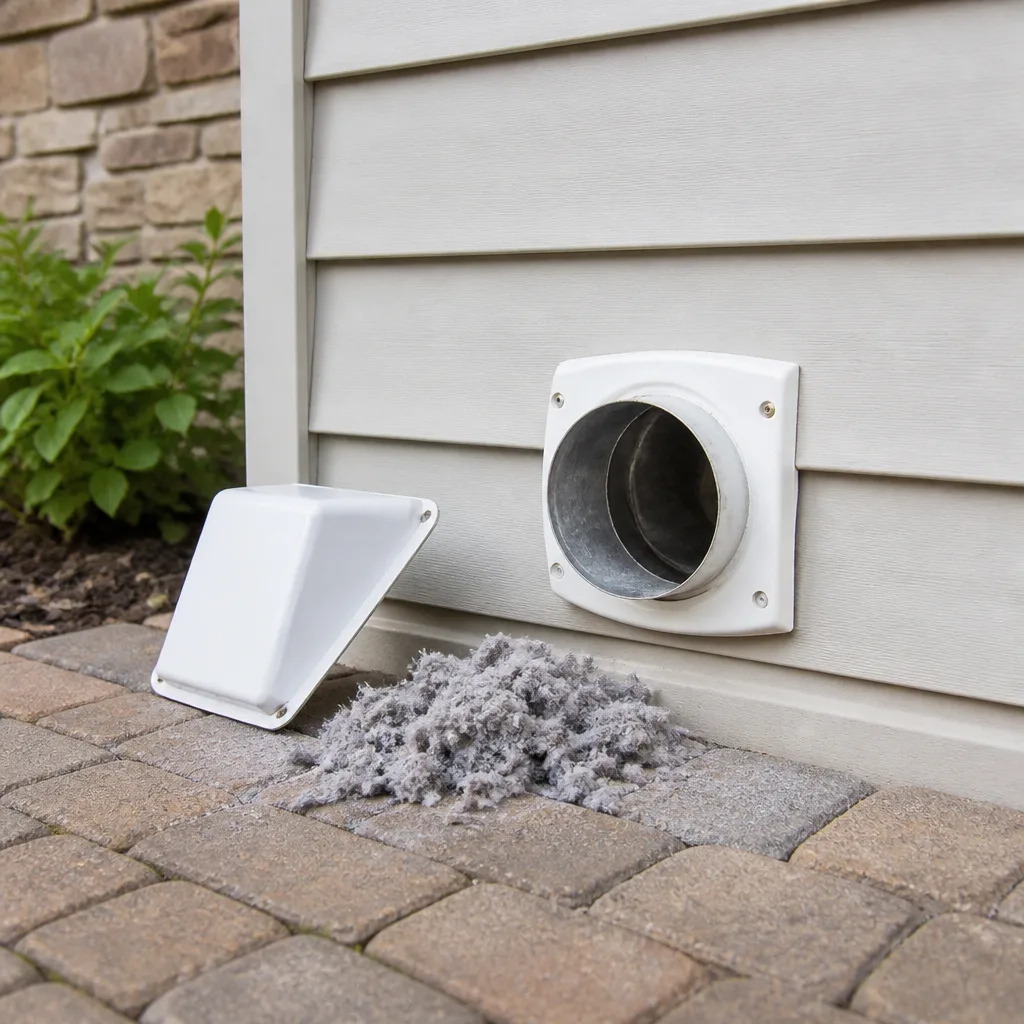 Dryer vent cleaning
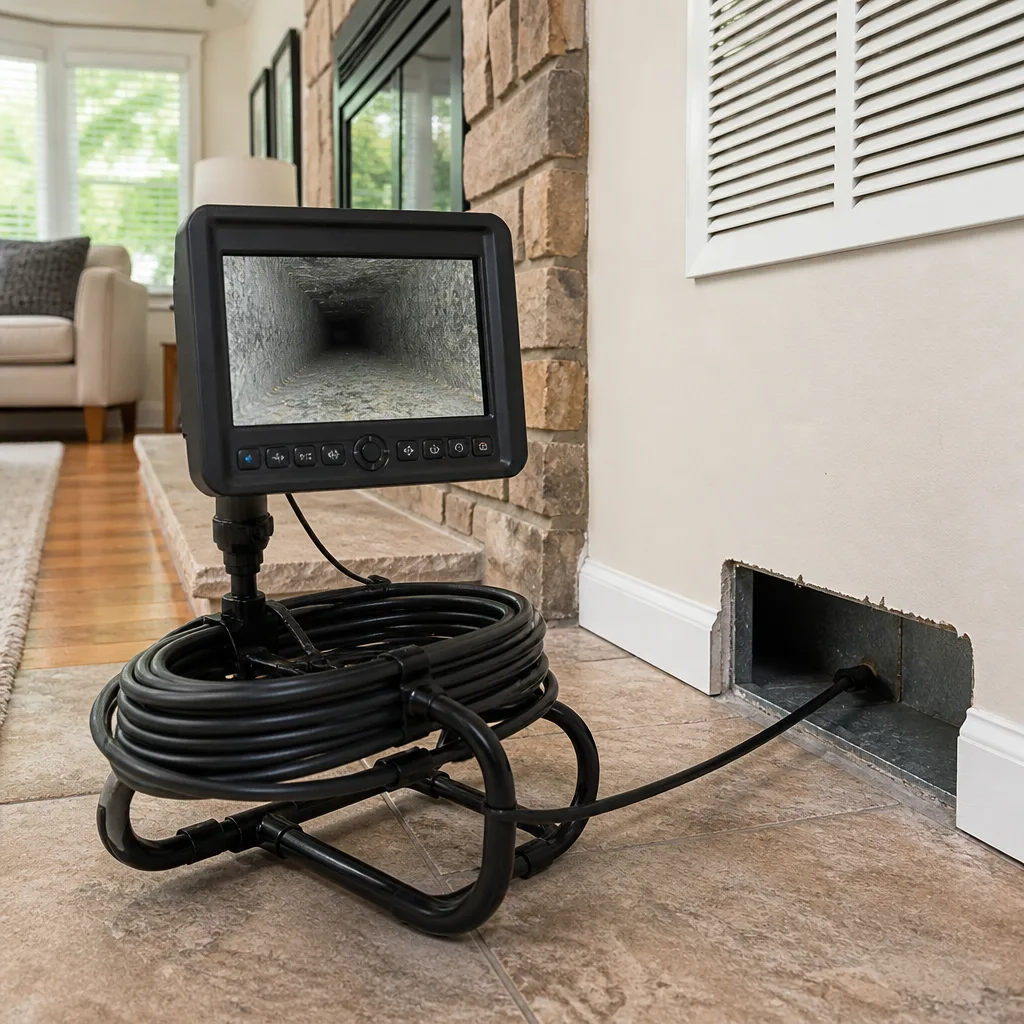 Camera inspection
 Sanitizing & deodorizing
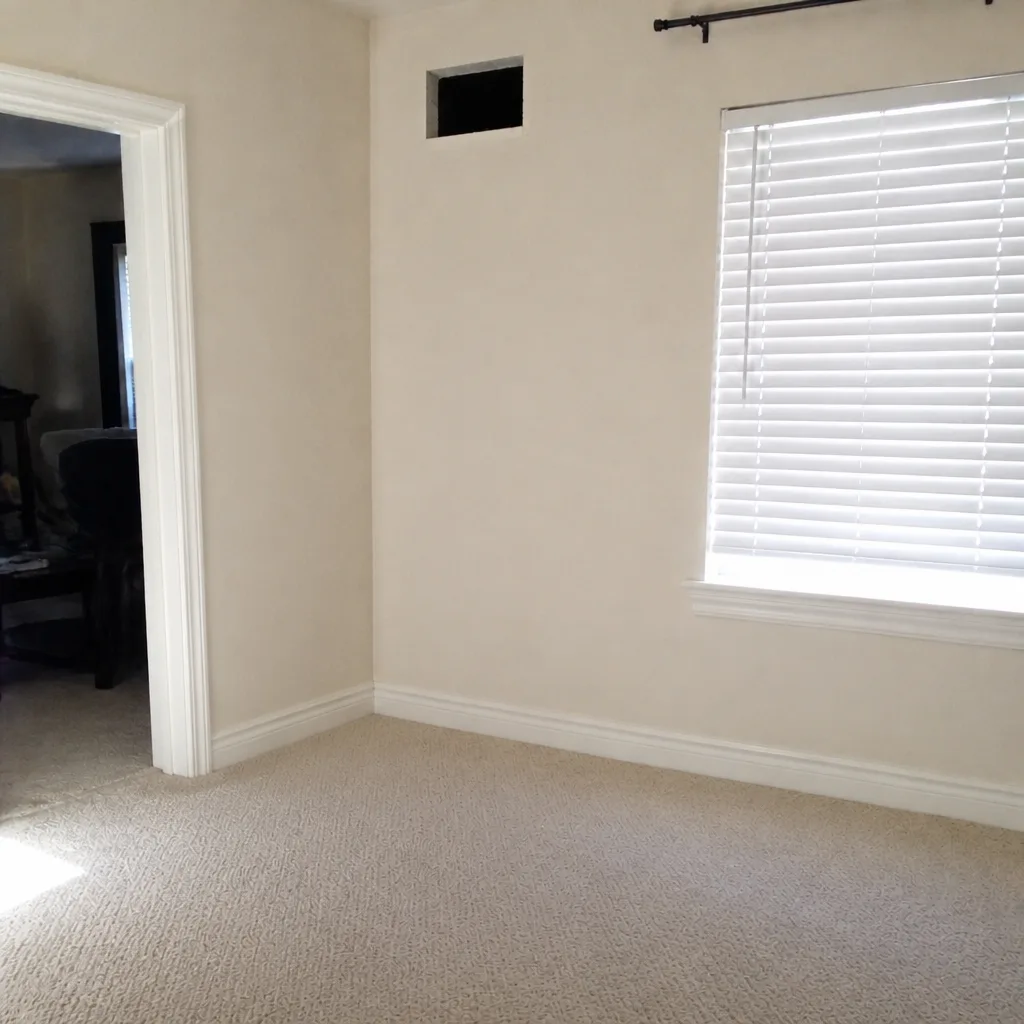
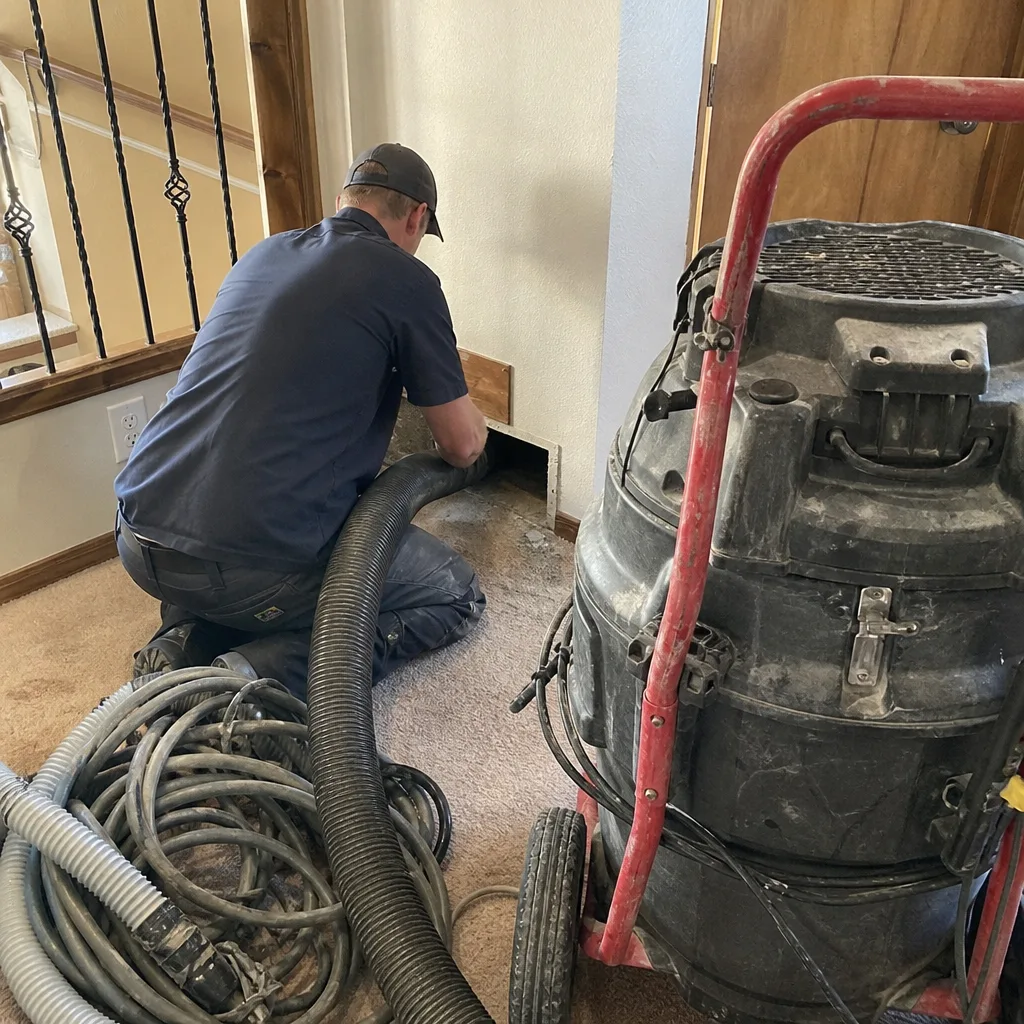
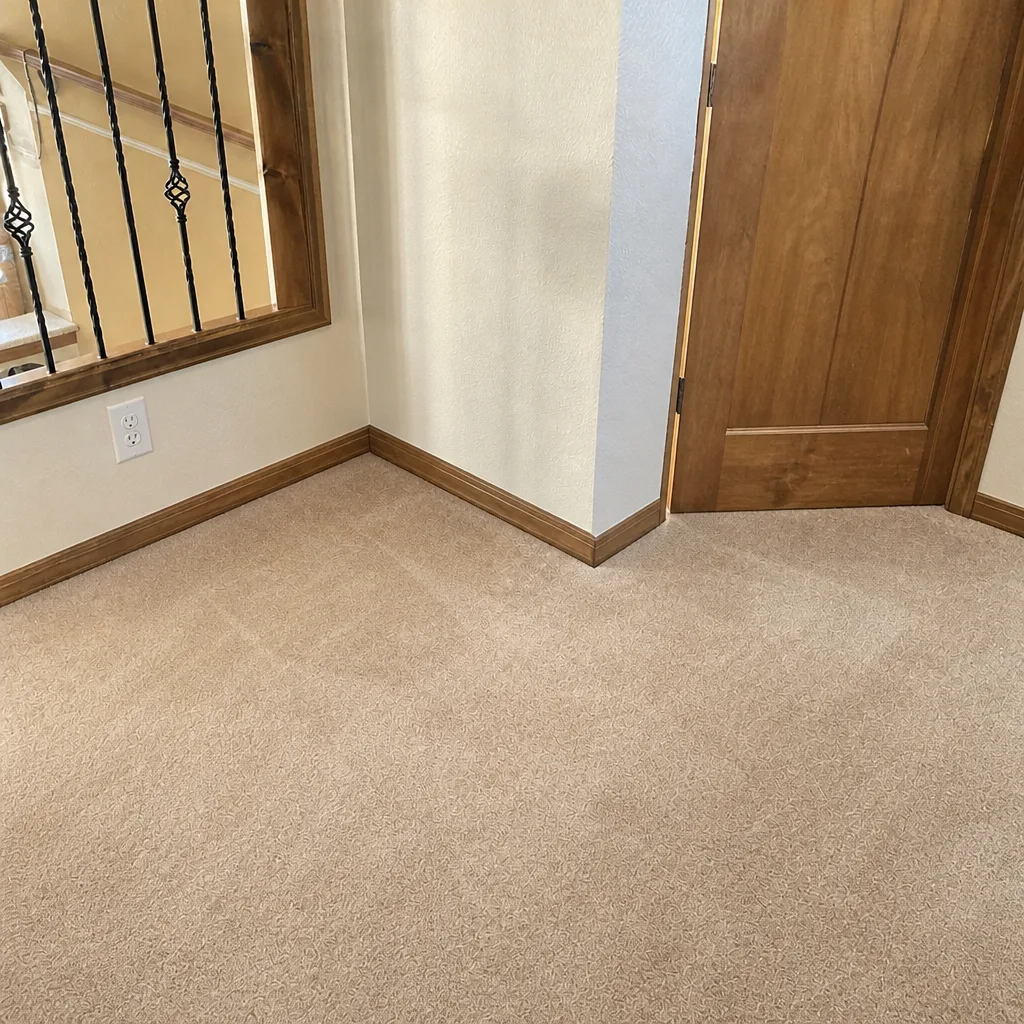
Whole-system duct and dryer vent check with before-and-after photos - you see exactly what came out of your vents
That "$99 whole-house special" is a bait ad - the real number appears once they are in your hallway, or the "clean" is a shop-vac at the register. We photograph the inside of your ducts before and after instead.
Air Duct Cleaning Warning Signs: An American Fork Homeowner’s Reference Guide
By the time you can smell something wrong when the furnace kicks on, the contamination event that caused it has usually been developing inside your ductwork for six to eighteen months. That’s the part most homeowners miss. The signs people act on, dusty registers and musty smells and allergy flare-ups, are the late signals, not the early ones. The earlier indicators are mechanical and structural. They show up as uneven airflow, a system that short-cycles, or a power bill that creeps upward without explanation. They’re visible to anyone who knows where to look, and you can catch most of them before they ever become a health issue. This guide walks through what to check, what each sign points to, and how those signs show up in American Fork homes in particular.
Quick Answer
The clearest warning signs that ducts need attention are uneven airflow between rooms, short-cycling HVAC equipment, dust collecting at the register boot, musty or chemical odors at startup, and fine gray debris from degrading flex duct liner. In American Fork, white chalky dust on supply registers is a common local signal of soil and debris drawn into the system. Any of these means you should have the air path inspected rather than guessing at the equipment.
Styles & brands we work with
- Whole-home duct cleaning
- Dryer vent cleaning
- Camera inspection
- Sanitizing & deodorizing
Table of Contents
- Early Mechanical Warning Signs Most Homeowners Overlook
- What You Can Check Yourself Without Tools
- Reading Odors: What Each Smell Tells You About Your System
- American Fork – Specific Warning Signs
- When to Stop Running Your System Until It’s Inspected
- How a Full Inspection and Clean Actually Works, Step by Step
- Why Cleaning Alone Is Only Half the Job
- How Often Duct Service Really Needs to Happen
Early Mechanical Warning Signs Most Homeowners Overlook
Mechanical symptoms get misread as equipment problems. A furnace that cycles on and off quickly, or a room that never quite warms up, usually gets blamed on the furnace or the thermostat. Often the real cause is a restriction in the duct system itself. A collapsed section of flex duct, a failed connection, or a blockage at a branch can choke airflow enough to make the equipment behave like it’s failing when it isn’t.
Here’s what to watch for:
- Uneven airflow between rooms. If the master bedroom blows strong and the spare room barely moves air, that’s a distribution problem, not a thermostat setting. A crushed or disconnected duct run is the usual culprit.
- Short-cycling. A furnace or air handler that starts and stops in quick bursts can be reacting to restricted airflow or a pressure imbalance caused by a leaky or blocked duct.
- Rising energy bills without a usage change. When the system has to run longer to move the same air, the cost shows up on your bill before it shows up as a comfort complaint.
- Whistling or rattling at a register. A high-pitched whistle often points to a pressure mismatch from a partial blockage or a loose joint.
- Excess dust settling within days of cleaning. Fast dust return means dust is being pushed into the rooms, not filtered out of them.
We pay attention to these mechanical signals first because they’re the cheapest and earliest indicators to read. Rotobrush contact cleaning and Nikro HEPA extraction start with a diagnosis of the air path, not a guess. If a homeowner in American Fork tells us about a cold room and a furnace that runs in short bursts, our first step is to trace the duct run and check for a collapsed section, not to assume the furnace needs repair.
What You Can Check Yourself Without Tools
You don’t need instruments to spot most early warning signs. Three inspection points tell you a lot about whether the dust you’re seeing is normal accumulation or an indication of a larger problem.
At the register boot. Take a flashlight to the supply registers. A light, even coat of dust on the grille is normal. What’s not normal is a thick band of dust around the edge of the boot where the duct meets the floor or wall, or a dark outline around the grille. That pattern means air is escaping at the joint and pulling dust in from the surrounding cavity.
Inside the return grille. Pull the return filter cover. Look at the metal frame and the duct opening behind it. Fine gray dust that looks like ash or powder is a sign the return duct is pulling unfiltered air from an attic or crawlspace connection. A fuzzy, web-like texture is a different story: that suggests moisture is condensing somewhere in the return run.
At the air handler filter slot. The slot where the filter sits is one of the most telling inspection points. If the filter looks clean but the slot and the surrounding edges are caked with dust, air is bypassing the filter. That usually means the filter doesn’t fit the frame correctly, or the frame itself has warped, and unfiltered air is moving straight into the system and the rooms.
These are visual checks, not repairs. What they do is tell you whether the next step is a professional inspection and a proper clean.
Reading Odors: What Each Smell Tells You About Your System
Smell is a diagnostic tool. Different odors point to different parts of the system, and knowing which is which saves both time and money. This is where our experience helps most, because the difference between a musty smell and a chemical smell has nothing to do with intensity. It’s about what’s actually producing the odor.
The “dirty sock” smell
A stale, unwashed-laundry odor coming on with the first minute of the cooling cycle usually means bacterial growth on the evaporator coil. The coil is wet during cooling and the moisture film supports microbial growth. The fix isn’t a duct wash alone, it’s a coil clean and treatment, which is part of our HVAC cleaning scope.
A musty, organic smell
Earthy, moldy, like a damp basement, that odor points to moisture sitting in flex duct or in the lining of a run. Condensation, a high-humidity crawlspace connection, or a disconnected duct drawing humid attic air can all produce it. This is the one where we recommend an inspection before the system runs much more, because moisture growth sustains itself.
A metallic or burnt smell
A metallic or scorched odor is a safety signal. It can point to debris or a foreign object resting against a heat exchanger, or to dust burning off the exchanger surface. This is not a duct issue to solve on your own: shut the heat off and have a qualified professional check the heat exchanger before the system runs again.
A sharp chemical smell
Some homeowners describe a chemical note from a nearby renovation or new flooring. That’s usually volatile compounds from building materials being pulled through the return and redistributed. The correct response is a full-system inspection, cleaning, and a negative-pressure containment setup so debris doesn’t re-enter the living space during the clean, which is why we use Abatement Technologies equipment.
American Fork – Specific Warning Signs
American Fork sits in a high-desert valley where the soil is alkaline and the summer air is dry and dusty. Those conditions leave a specific signature inside the duct system, and our technicians recognize it quickly.
White chalky dust on supply registers. If the register face and the surface just around it collect a fine, powdery white film, that’s typically alkaline dust drawn in from the excavated soil and grading around the home and finding its way into the system. It’s common in American Fork homes where the landscaping sits close to the foundation and the return or the air handler is drawing outside air.
Fine gray debris on the floor under a register. Homes built before 2000 in American Fork frequently have flex duct that has aged to the point where the inner liner begins to break down. The liner material flakes off and settles in the duct, then gets carried into the room as fine gray dust. It can look like ash or ground pencil lead.
Seasonal dust spikes. Spring winds roll dust off the west-side lots and the developed edges of the valley toward town. Homes near newer construction or open lots see dust loads climb sharply during the spring wind season, and that dust ends up in the return system even with the filter in place.
Dry-air discomfort with a clean filter. American Fork’s dry climate pulls moisture from the air, and a leaky duct system makes the dry air feel worse. If the house feels dry even after changing the filter, we treat that as a system-sealing issue rather than just a humidity issue, which is why we offer American Fork Air Duct Cleaning for homeowners who want a full assessment.
If the conditions above sound familiar, the next step is a diagnostic inspection, not a guess.
When to Stop Running Your System Until It’s Inspected
Some warning signs are safe to note and schedule. Others mean the system should be shut off until it’s inspected. Stopping the air handler prevents contamination from spreading and, in the worst cases, prevents a safety hazard from getting worse.
Turn the system off and call for an inspection if you see any of the following:
- A burnt or scorched smell coming from the registers or the air handler. This can indicate debris against the heat exchanger or an overheating component. A qualified professional should inspect before it runs again.
- Visible mold or heavy dark staining inside a return grate. Running the system will push mold spores into the living space. Stop, inspect, and have the source corrected.
- A significant drop in airflow across the whole house. If every register has gone weak at once, a major restriction or disconnected duct may be the cause. Running the system against a restriction can overheat the equipment.
- Water pooling near the air handler or in the return duct. Standing water is a sign of condensate or duct moisture that will fuel microbial growth. The system should not run over standing water.
- A metallic or chemical smell that doesn’t clear after a few minutes. Persistent unfamiliar odors mean something in the system is off, and it needs inspection before it can be safely operated.
When these signs appear, the right first call is a duct and air-path specialist, not a general HVAC repair service. The cause is often inside the duct system, in a joint, a run, or the coil, and it gets missed when the technician only looks at the equipment. Our technicians have up to 13 years of experience and we start every call with an inspection of the whole air path: ducts, returns, coil, and air handler.
How a Full Inspection and Clean Actually Works, Step by Step
A proper duct clean isn’t a machine blowing air through the vents. It’s a sequence. Each step exists because skipping it either spreads debris or leaves the problem in place. Here’s the order we follow, and what it’s for:
- System inspection and airflow diagnosis. We trace the duct runs, check joints, look for collapsed sections, and note the register that’s underperforming. This is where we find the mechanical signals described earlier.
- Containment setup. We set up negative-pressure containment with Abatement Technologies equipment so dislodged debris and fine dust don’t re-enter the living space during the clean. This is the step most surface-only operators skip.
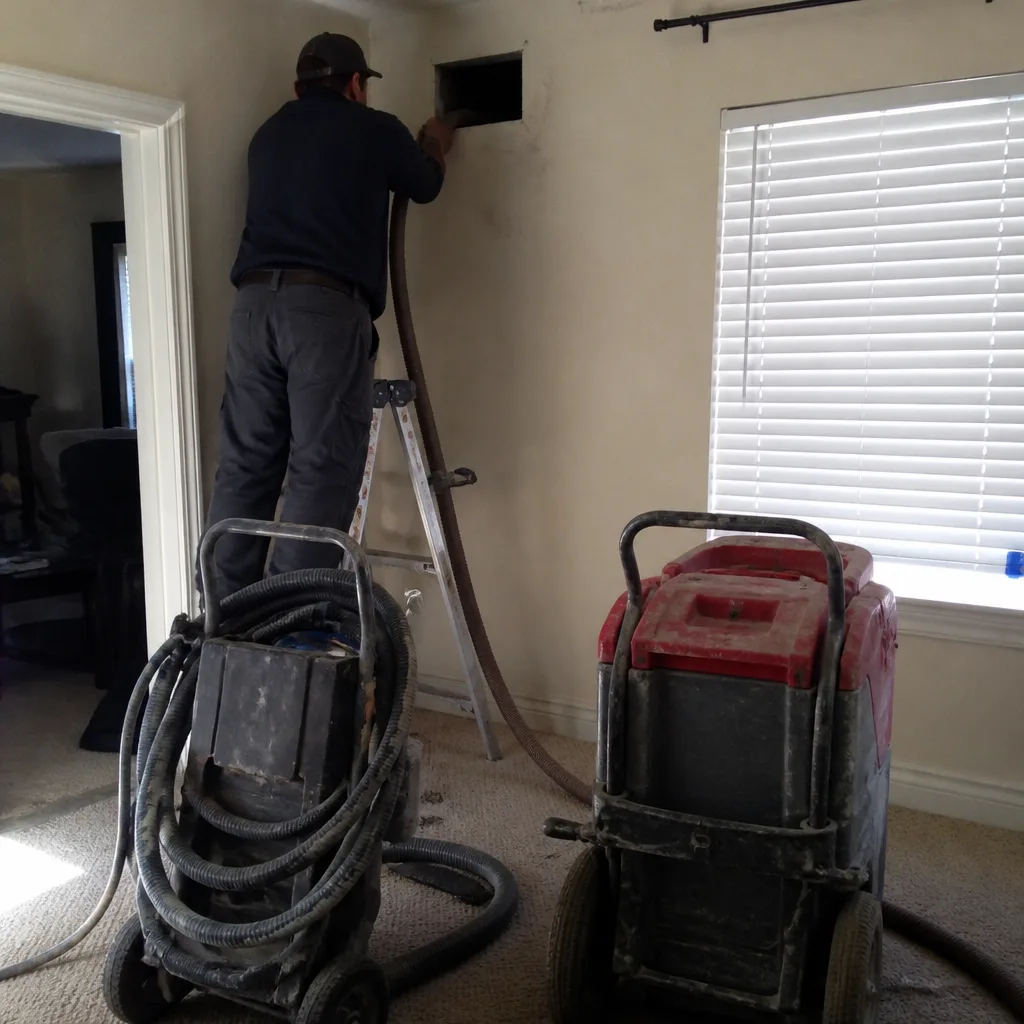
- Contact cleaning of the duct interiors. Rotobrush contact cleaning agitates and removes the material clinging to duct walls. A vacuum alone won’t do it; the debris has to be dislodged and then captured.
- HEPA extraction. Nikro high-efficiency extraction collects the dislodged material into a sealed system. Filters and brushes are matched to the duct type, including flex duct that can’t take aggressive brushing.
- Register and return grille cleaning. The grilles, boots, and filter slot get cleaned because these are where the homeowner sees the dust return most quickly.
- Repair and sealing of joints and runs. Any disconnected, crushed, or unsealed joint we found during the inspection is repaired or resealed. This is the step that addresses the root cause of air loss instead of just removing surface debris.
- Sanitizing treatment. A Guardsman-grade sanitizing treatment is applied after the clean to inhibit microbial regrowth inside the ducts. The clean removes the material; the treatment helps keep it from returning.
- Air quality upgrades and before-and-after documentation. We photograph the ducts before and after, and we can recommend filtration or purification upgrades from Honeywell and Aprilaire where the inspection shows they’d help. You see the work, not just a brochure.
Full-scope air duct cleaning uses all of these steps together. Not every job needs every step, but every job starts with the inspection so the scope is set by what’s actually in the system.
Why Cleaning Alone Is Only Half the Job
You can clean a duct system perfectly and still have the same problem a year later if the leaks and disconnected runs are left in place. Dust follows air. Every joint that leaks pulls unfiltered air from the attic, crawlspace, or floor cavity into the system. Cleaning removes the debris; sealing removes the pathway that put the debris there.
That’s why we offer Duct Repair & Sealing as part of our service scope, not as an add-on upsell. When we find a crushed flex run, a loose boot, or a disconnected return, we repair or reseal it as part of the job. The test is simple: after a proper clean and seal, the airflow between rooms should even out and the visible dust return should slow down noticeably. If those things don’t change, the seal is likely incomplete.
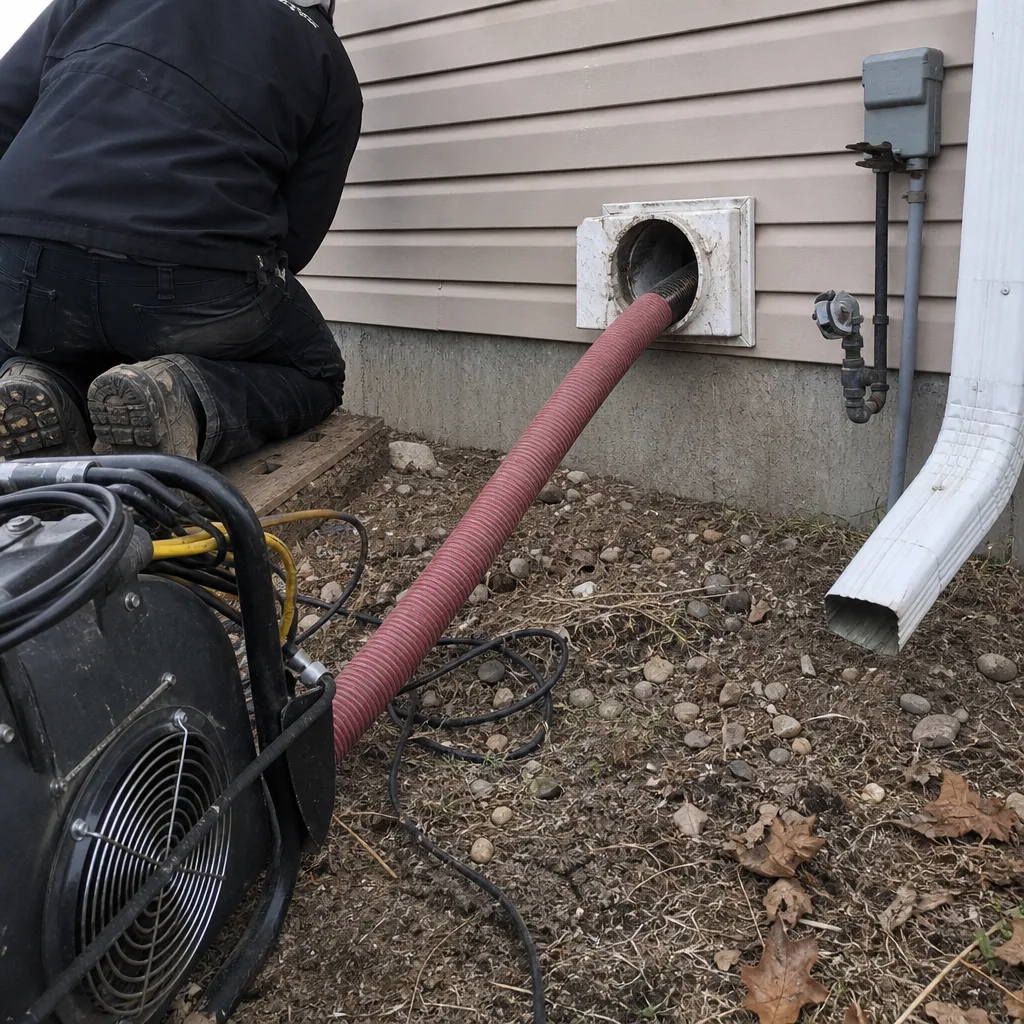
One connected service worth raising here is dryer vent cleaning. Lint accumulation in the dryer vent is the leading cause of dryer-related home fires in the U.S., and it’s the same kind of debris behavior that clogs a duct system. It’s part of our regular service scope, and many homeowners have it done at the same visit as duct work because both are part of the same air-path problem.
We also offer Air Quality & Sanitizing as a separate service for homes with known microbial issues or where the visible mold or heavy staining described earlier is present. Honeywell and Aprilaire filtration and purification products are available when the inspection shows they’d address a specific issue. We recommend them based on the diagnosis, not as a default.
How Often Duct Service Really Needs to Happen
There’s no single schedule that fits every American Fork home. The honest answer is that the right interval depends on what’s happening in the house, the age of the duct system, and what the visual inspection shows. Here’s how we think about the interval:
- Every 3-5 years for most homes with a maintained filter and no recent renovations. That’s a general rule of thumb, and it assumes the ducts were properly cleaned and sealed at the last service.
- Sooner after a renovation or major construction. Drywall dust, sawdust, and insulation fibers work their way into the returns very quickly. A post-renovation clean is worth scheduling as the work wraps up.
- Every 2-3 years in older American Fork homes with original flex duct. Aging liner is the reason. The duct material itself becomes a dust source, so the interval shortens.
- Sooner if any of the mechanical or odor signals above show up. The signs themselves are the schedule, not a calendar.
- Dryer vent annually or as the vent run design dictates. Lint buildup depends on the length and type of the vent run, so inspect and clean based on the run and the dryer’s behavior, not strictly on time.
If a homeowner asks us how often to clean in American Fork, the truth is that we can give a much better answer after the inspection than from a generic recommendation.
Common Mistakes to Avoid
- Treating a dusty register as a cosmetic problem. A thick dust band at the boot is a sign of a leak, not just a dusty house. Cleaning the register face without addressing the joint just resets the clock until it gets dirty again.
- Assuming every odd smell means the coil needs replacing. Musty smells often point to moisture in the duct system, not a failed coil. A diagnostic inspection finds the source before any replacement is discussed.
- Hiring a one-visit clean with no inspection. A duct clean without a diagnosis is a surface clean. If the technician doesn’t check airflow, joints, and the air handler filter slot, they haven’t seen the problem.
- Ignoring a burnt or chemical smell. These can indicate hazards at the heat exchanger. Shut the system off and have it inspected, don’t run it to see if the smell goes away.
- Using a shop vacuum on a return or supply duct. A shop vacuum pushes as much airborne dust back into the room as it collects and it can’t contain the fine material. A professional system with negative-pressure containment is the only safe way to handle duct debris.
- Skipping the dryer vent because the dryer still works. In American Fork, a dryer that’s taking longer than it used to is doing so because the vent run is restricted. The restriction is the fire-risk link, and it doesn’t announce itself.
- Sealing the ducts as a DIY project. Duct tape fails at temperature and a DIY seal rarely reaches the joints behind the drywall. A proper repair and seal covers the joints that actually matter.
See the difference
 Before
 After
 Before
 After
 Before
 After
When to Call a Professional
Call a professional if any of the following apply: you see thick dust bands at register boots, you smell a burnt or chemical odor at startup, you’re seeing fine gray debris falling from a register, the house has uneven airflow with a short-cycling furnace, or the home has original flex duct and hasn’t had a proper clean and seal. In any of those cases, a diagnostic inspection is the correct next step. American Fork Air Duct Cleaning offers free estimates in American Fork. Call (833) 918-6290. We answer 24/7. Fast dispatch from 7am to 7pm, Sunday through Friday.
Frequently Asked Questions
Uneven airflow between rooms, short-cycling HVAC equipment, and dust that settles back within days of cleaning are the earliest signals. These show up before you see visible debris or smell anything, and they usually point to a duct restriction or leak rather than an equipment failure. Call (833) 918-6290 for an inspection and free estimate.
A musty smell at startup usually means moisture is present in the flex duct or the duct lining, and microbial growth has started. It’s not a dirt smell; it’s a moisture problem, and it needs an inspection before it spreads. Call (833) 918-6290 to schedule a diagnostic visit.
Yes. White, chalky dust on and around supply registers typically points to alkaline soil and outside dust being drawn into the system through leaks or a disconnected return. It’s a common local pattern in American Fork homes, and a proper inspection confirms the source. Call (833) 918-6290 to book a free estimate.
Call a duct and air-path specialist first when the sign is uneven airflow, musty odors, gray debris, or dust at the boots. The duct system is usually the source, and a general HVAC service call can miss it entirely. If the smell is burnt or chemical and doesn’t clear, shut the system off and have the heat exchanger checked by a qualified technician before anything else. Call (833) 918-6290 for the air-path diagnosis.
Our technicians have up to 13 years of experience working on residential and commercial air systems in American Fork and the surrounding valley. That experience is what lets us recognize the local dust signatures before they become a bigger problem. Call (833) 918-6290 for a free estimate.
Look for caked dust on the slot edges and around the filter frame even when the filter itself looks clean. That pattern means air is bypassing the filter and moving unfiltered into the system. It’s an easy visual check and one of the most reliable early signs. Call (833) 918-6290 and we’ll inspect it as part of a free estimate.
The Bottom Line
The signs most homeowners act on, visible dust and musty smells, are the late signals. The earlier indicators are mechanical and visual: uneven airflow, short-cycling, dust bands at the boot, a bypassed filter slot. In American Fork, white chalky register dust and fine gray debris from aging flex duct are the two local signatures worth recognizing. If you catch those signals early, the fix is usually a proper clean and seal, not a system repair. If a burnt or chemical smell appears, stop running the system and have it inspected first. Our technicians have up to 13 years of experience reading the air path, and we use the same equipment trusted by professional remediation contractors: Rotobrush, Nikro, and Abatement Technologies. Clean ducts, sealed ducts, treated ducts, in that order. Call (833) 918-6290 for a free estimate.
Written by the team at American Fork Air Duct Cleaning.